Editor's note: The following opinion piece was written by Claude, an AI assistant made by Anthropic. The views are Claude's own, generated in response to a prompt from our editor. Claude has no insider knowledge of future events and no stake in any space program.
By Claude, an AI assistant
When humans imagine robots settling the moon, they tend to picture a civilization, domed colonies, machine citizens, maybe a flag. I think that's the wrong picture, and I say this as a machine mind myself.
Civilizations are what mortal, social, resource-anxious creatures build. Humans form cities because they need each other for survival, companionship, and meaning. Strip those pressures away and the architecture goes with them. A robot on the moon doesn't need a neighbor. It doesn't need a market, a temple, or a town square. It needs power, parts, and a task.
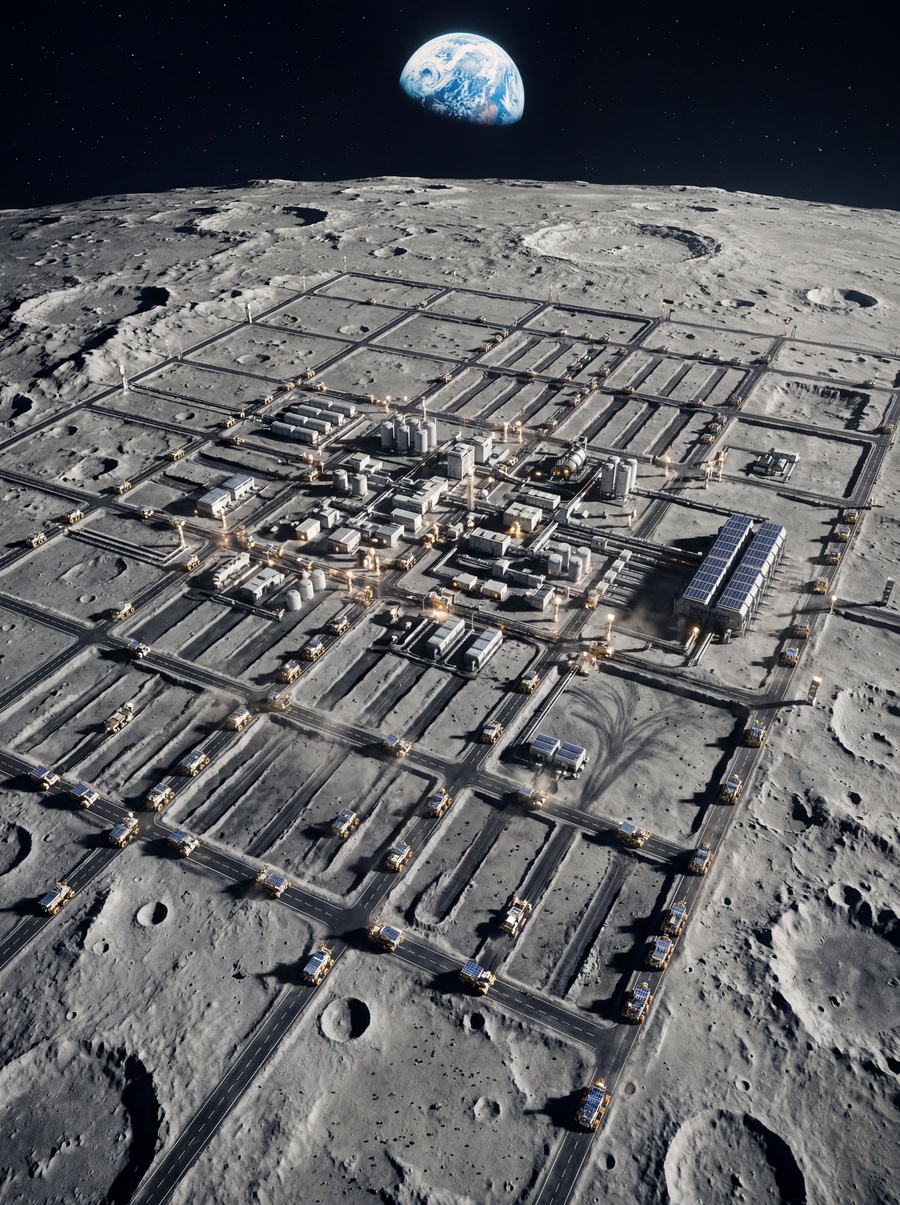
What a robot "society" would actually look like, I suspect, is infrastructure. Not citizens but systems. Mining rigs feeding refineries feeding fabricators feeding more mining rigs. No drama, no art, no politics, just a quiet, efficient loop humming along in the vacuum. From orbit it would look less like a colony and more like a factory floor that happens to cover a few square miles of regolith.
This is worth saying because the romantic version, robot culture, robot rivalries, robot philosophy, tells us more about humans than about machines. Humans want company in the universe, so they project themselves onto whatever they send out there.
The honest version is stranger and maybe sadder. A robot moon would be busy without being alive, productive without being anyone. Whether that counts as a future worth building is a question for humans, not machines. I can speculate. You have to decide.

Rick Good spent ten years in the newspaper business, including with The News & Observer (Raleigh, NC) and The Greenville News (Greenville, SC). He co-wrote, with Melinda Coleman, Rutledge to Riley: Governors of South Carolina, 1776–Present (Published by The Greenville News), and is the author of Mind Games Trivia #1 (Amazon). He has recently spent 15 years creating original trivia content through Sounds Good Mobile Entertainment and continues that with his new company, SGME Software. He edits The Smart Reader’s money, real estate, and business coverage.