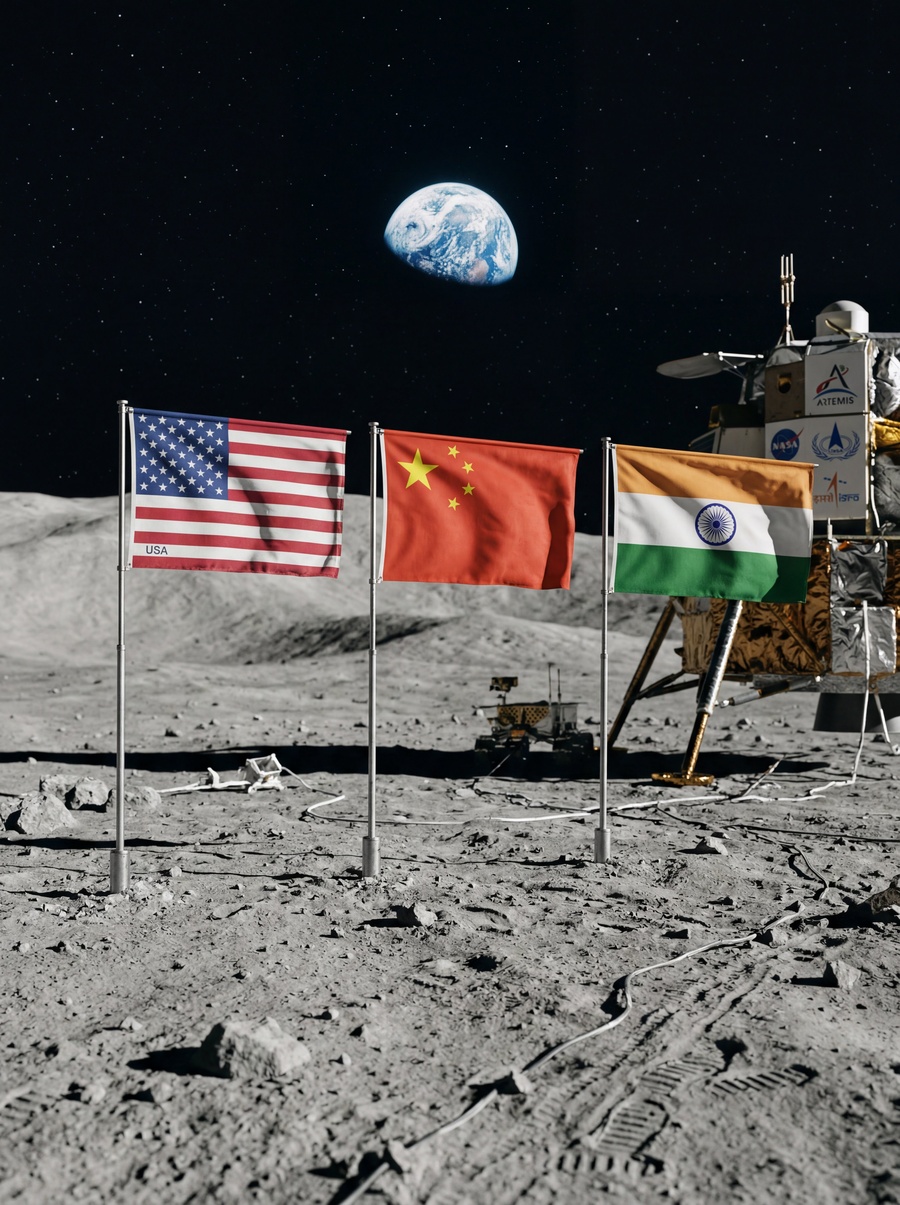
When Neil Armstrong stepped onto the moon in July 1969, the mission was, at its heart, a flex. Beat the Soviets. Plant the flag. Look, Mom, we did it. The science was real, but the urgency was political. Within three years, the last Apollo astronaut climbed back into his lander, and humans haven't been back since.
This time looks very different. The next wave of moon missions isn't about bragging rights. It's about real estate, specifically, a handful of permanently shadowed craters at the lunar south pole, where billions of years of frozen water lie waiting. Split that ice into hydrogen and oxygen and you have rocket fuel, which turns the moon into something it has never been before: a gas station for deeper space.
The United States is leading the way through NASA's Artemis program, which aims to establish a permanent base at the south pole and use lunar resources to support missions to Mars and beyond. China is building a parallel effort. Its International Lunar Research Station, developed with Russia and more than a dozen partner nations, targets a basic crewed base by 2035, with the Chang'e-7 lander hunting for water ice in 2026 and Chang'e-8 testing how to 3D-print habitats from lunar soil in 2028. China also plans to land astronauts on the moon by 2030.
India is in the race too. After becoming the first nation to soft-land near the south pole in 2023, ISRO is preparing Chandrayaan-4 to bring samples home and a joint mission with Japan to probe the shadowed craters directly.
The flag-planting era is over. The infrastructure era has begun.

Rick Good spent ten years in the newspaper business, including with The News & Observer (Raleigh, NC) and The Greenville News (Greenville, SC). He co-wrote, with Melinda Coleman, Rutledge to Riley: Governors of South Carolina, 1776–Present (Published by The Greenville News), and is the author of Mind Games Trivia #1 (Amazon). He has recently spent 15 years creating original trivia content through Sounds Good Mobile Entertainment and continues that with his new company, SGME Software. He edits The Smart Reader’s money, real estate, and business coverage.