


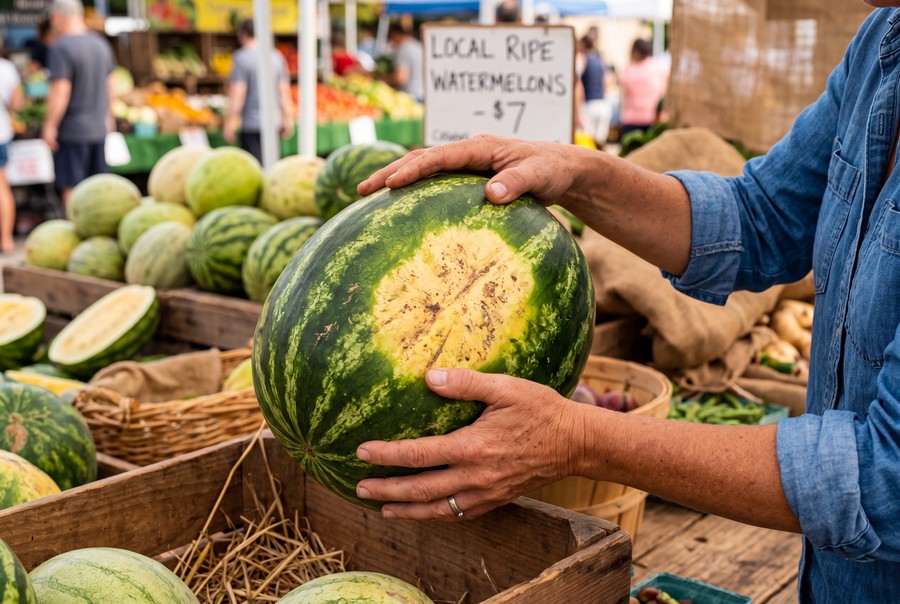
The creamy yellow ground spot is the single best sign of ripeness. A few more cues stack the odds in your favor.
Heft it. A ripe melon feels heavy for its size, a sign it is full of water and sugar. Set two of equal size side by side and take the heavier one.
Hunt for webbing. Rough, tan, web-like scars on the rind show where bees pollinated the flower, and heavier pollination tends to mean sweeter fruit — a good sign, though not a guarantee.
Check the stem. A dry, brown stem means the melon ripened on the vine. A green one means it was cut too soon.
Skip the shine. A dull, dark rind points to ripeness; a glossy sheen usually means underripe.
Then tap. A ripe melon answers with a deep, hollow thump, not a dull thud. It is the least dependable test, so save it for breaking a tie.

Rick Good spent ten years in the newspaper business, including with The News & Observer (Raleigh, NC) and The Greenville News (Greenville, SC). He co-wrote, with Melinda Coleman, Rutledge to Riley: Governors of South Carolina, 1776–Present (Published by The Greenville News), and is the author of Mind Games Trivia #1 (Amazon). He has recently spent 15 years creating original trivia content through Sounds Good Mobile Entertainment and continues that with his new company, SGME Software. He edits The Smart Reader’s money, real estate, and business coverage.