


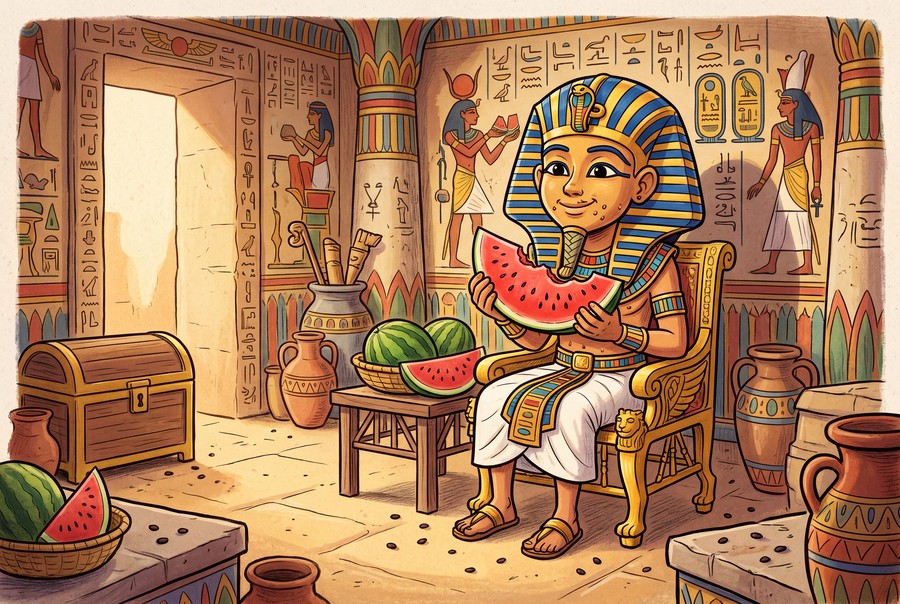
When Howard Carter opened King Tutankhamun's tomb in 1922, the food left for the young pharaoh's afterlife included watermelon seeds, sealed away more than 3,000 years ago. They were not the sweet red melons we know today, though — that early watermelon was likely pale and bitter, prized mainly for its seeds.
The fruit is genuinely ancient, growing wild in Africa long before it reached the table. A 2021 genetic study traced its closest living relative to the Kordofan melon of Sudan, in the continent's northeast, revising the long-held idea that watermelon came from southern Africa.
Centuries of breeding turned that hard, bitter gourd into summer's juiciest treat. Today's watermelon is about 92 percent water — exactly what makes it so refreshing — and its red flesh gets its color from lycopene, the same antioxidant found in tomatoes.

Rick Good spent ten years in the newspaper business, including with The News & Observer (Raleigh, NC) and The Greenville News (Greenville, SC). He co-wrote, with Melinda Coleman, Rutledge to Riley: Governors of South Carolina, 1776–Present (Published by The Greenville News), and is the author of Mind Games Trivia #1 (Amazon). He has recently spent 15 years creating original trivia content through Sounds Good Mobile Entertainment and continues that with his new company, SGME Software. He edits The Smart Reader’s money, real estate, and business coverage.