With knitting, you can do something productive and challenging, even while sitting in the living room.
Or you can put your mind into a meditative zone, easing your anxiety as you knit along and shed your worries.
Sadly, some give up knitting as they age. Arthritis becomes a problem and it may feel as though repetitive motions create pain.
But there are some options if you want to continue knitting.
Moderation that prevents stress injuries is one key to happy knitting. There might once have been a time when a knitter could knit for hours, but if pain becomes an issue, build in rest periods. Take a 10 minute break every 45 minutes. Stretch your hands, stand up, drink water.
Try using a pillow under each elbow and one on your lap. The pillow on the lap can support a heavy project, like a blanket.
For arthritis pain, warmth usually helps decrease pain and increase mobility. Try soaking your hands in warm water before beginning. One knitter with rheumatoid arthritis said she warms up her hands in the morning by holding a cup of warm coffee. She then knits for 20 or 30 minutes at night, which seems to help her hands stay nimble. If she doesn't knit, her hands are much stiffer and more painful the next day.
You can also try a circular needle. It can help prevent dropped needles and force you to knit with a flatter posture.
Knitting belt
The European tradition of the knitting belt can also be very useful for knitting continental style. One double-pointed needle holding the project sticks into the belt, while the other hand is free to move. You never bear the weight of the project. A pouch holds a small ball of yarn.
Knitting Aid
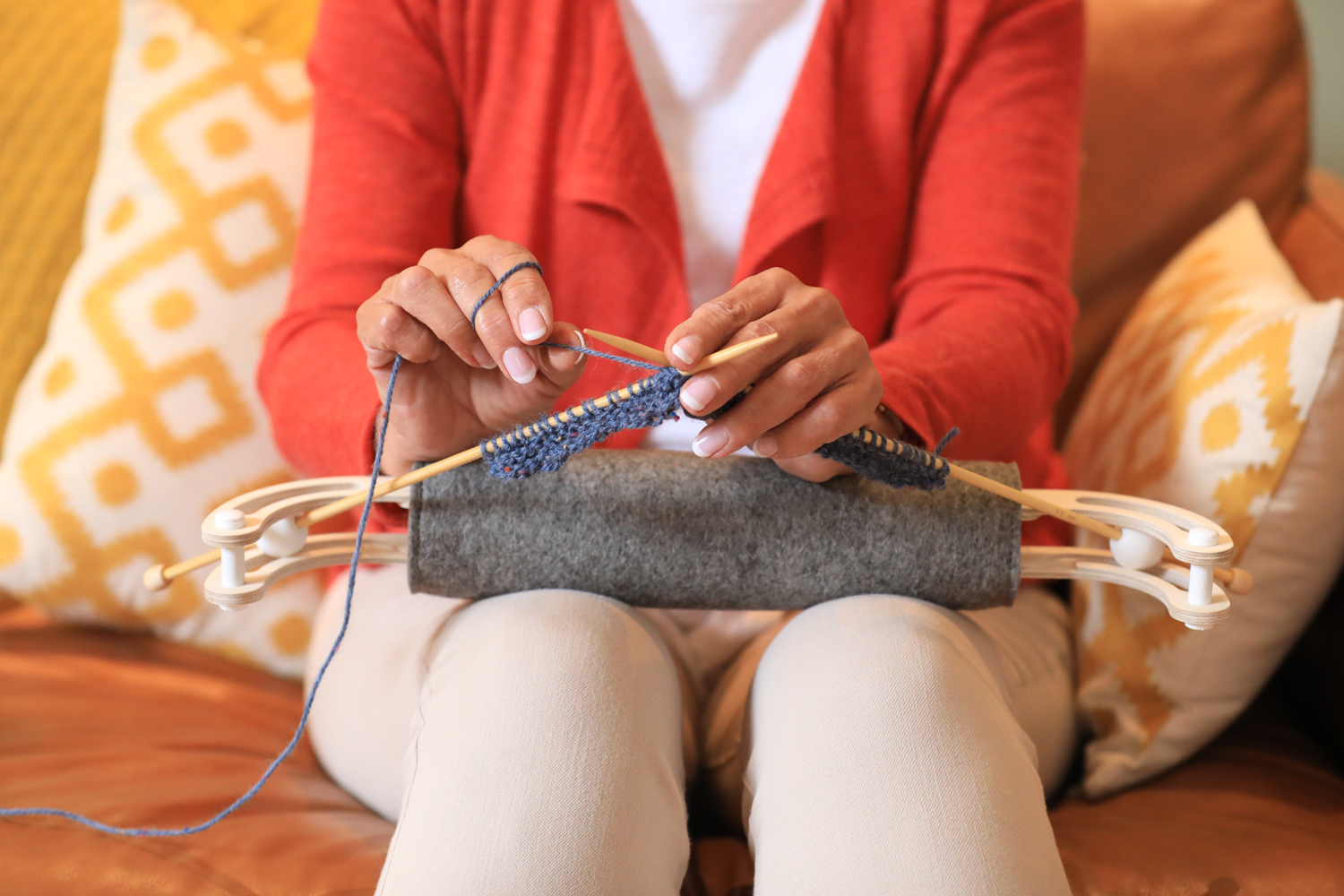
Another helpful invention is the Knitting Aid, a device that holds the needles for you, so your grip becomes less important, while it supports the wrists and arms. At $120, it isn't for everyone, but it might help reduce pain — or even make it possible to start this heritage art form.

Allyson Good curates senior living, health, and family content. She is formerly the Managing Editor of Active Life, a print newspaper published in 2016-2017 for seniors, choosing practical articles on health, money, safety, and everyday living for older readers. She is also an avid gardener and offers up Garden Hints and Tips on a regular basis.