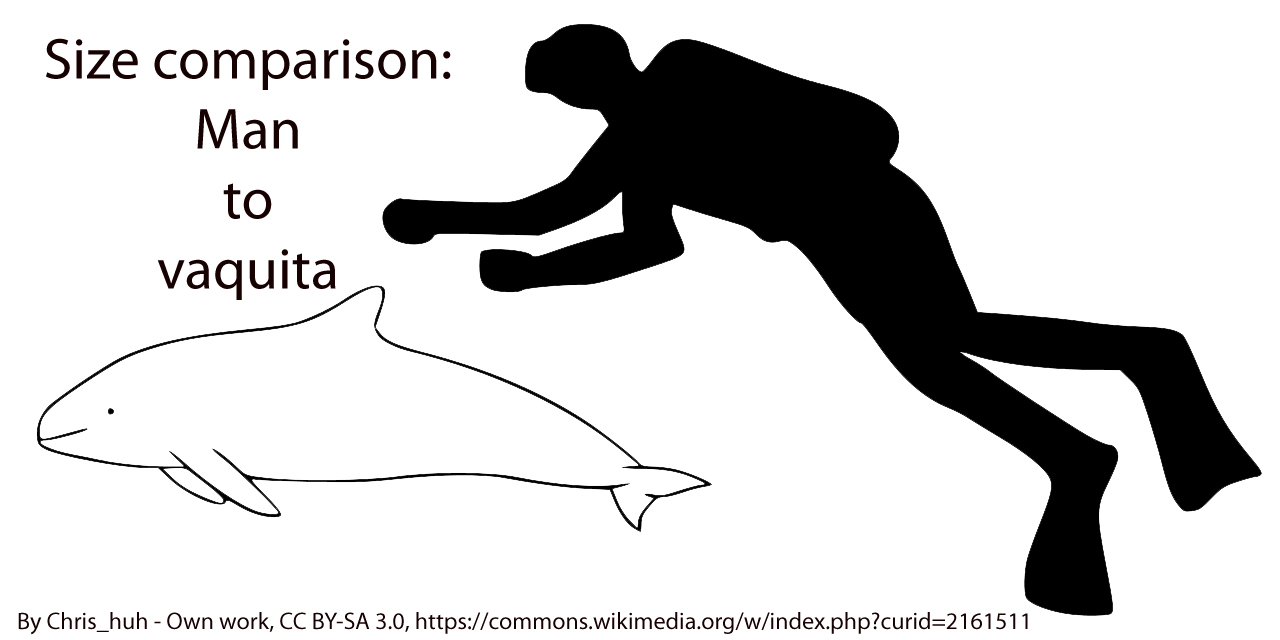
The small porpoise that lives only in the northern Gulf of California is down to 30 members, according to Science magazine.
A new report in February showed that the small cetacean, whose numbers have been dwindling for years, has finally been decimated by gillnets.
Gillnets are panels of net strung horizontally across the water. Vaquita swim into the nets, become tangled and drown.
But Gillnet fishermen are not hunting vaquita. They are fishing for totoaba, a large critically endangered fish of the drum family. In recent years, a demand from China has driven totoaba fishing based on a myth that the fish has medicinal value, according to Science.com.
A series of socio-political initiatives have been launched since 2008, all of which failed to halt the decline of the vaquita. Among the efforts were a limited ban on gillnets; reimbursement of fishermen; and an attempt to get the Chinese to stem the transport of the totoaba fish.
The last remaining hope for the vaquita, which means little cow, is that captive breeding programs might work, although the genetics of the species may have already been undermined by inbreeding.
The captive breeding program relies on sea pens, which will not be complete until October 2017. This may be too late for the little porpoise.

Rick Good spent ten years in the newspaper business, including with The News & Observer (Raleigh, NC) and The Greenville News (Greenville, SC). He co-wrote, with Melinda Coleman, Rutledge to Riley: Governors of South Carolina, 1776–Present (Published by The Greenville News), and is the author of Mind Games Trivia #1 (Amazon). He has recently spent 15 years creating original trivia content through Sounds Good Mobile Entertainment and continues that with his new company, SGME Software. He edits The Smart Reader’s money, real estate, and business coverage.