
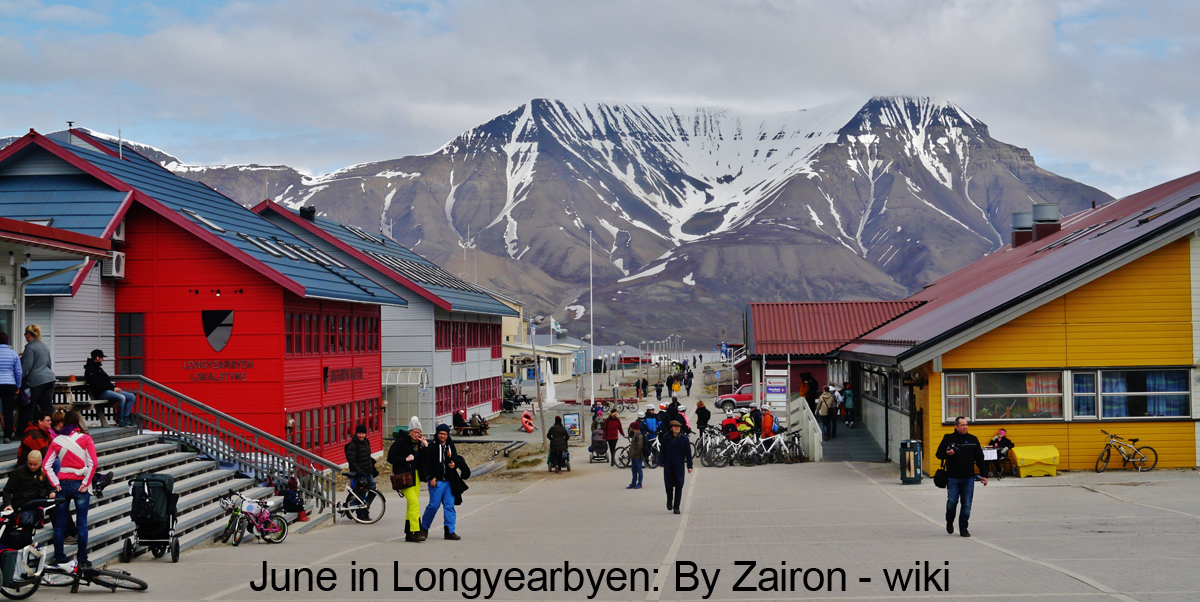
The village with the longest winter
Every December, one place on earth is starting its second month of complete darkness, a long, cold winter during which time no resident will actually see the sun until March.
Longyearbyen is the world's northernmost inhabited area, positioned on the Norwegian archipelago of Svalbard, about halfway between the northern coast of Norway and the North Pole.
The sun will actually return to Longyearbyen in mid-February after 111 days of darkness but, because of the town's position near the mountains, no one will actually see it until around March 8.
Of course, after that they are going to see it night and day until the end of August.
About 2700 people live in the former coal town, founded in 1906. Today they navigate the snowy winters with headlamps and snowmobiles in a world where the warmest recorded day was 71 degrees in July 2020 and the coldest was -51 in March 1986.
The town's location has necessitated unique laws. In the early days of settlement, residents were coal miners and the coal company didn't want them drinking much. Today, residents have to apply for an alcohol card, restricting purchases of beer and spirits. But buy all the wine you want.
Because of the threat of polar bears, they also must carry a rifle if they leave the city limits.
No cats and mostly no dogs are allowed on the entire Svalbard archipelago because of the threat they pose to local plant and bird species.
And finally, residents joke, dying is illegal in Longyearbyen. The truth is, you can't be buried in Longyearbyen because the permafrost doesn't allow bodies to decompose.

Rick Good spent ten years in the newspaper business, including with The News & Observer (Raleigh, NC) and The Greenville News (Greenville, SC). He co-wrote, with Melinda Coleman, Rutledge to Riley: Governors of South Carolina, 1776–Present (Published by The Greenville News), and is the author of Mind Games Trivia #1 (Amazon). He has recently spent 15 years creating original trivia content through Sounds Good Mobile Entertainment and continues that with his new company, SGME Software. He edits The Smart Reader’s money, real estate, and business coverage.