
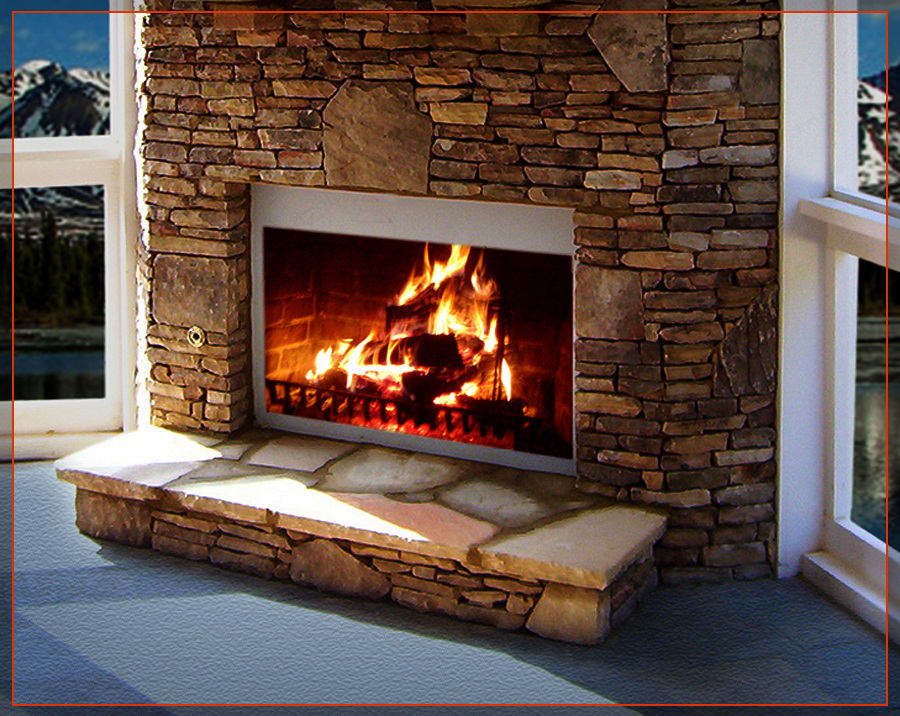
Oh the weather outside is frightful, but the fire is so delightful! That crackling, cheerful dancing fire in the fireplace is sure to kindle deep appreciation from family and guests on chilly winter days.
Throughout the ages, the home hearth has been the center of cheer on dreary days.
For some, keeping the home fires burning is practically a sacred tradition. Mary-Anne Robb, resident of the stately Cothay Manor in Somerset, England keeps the fire burning in her Great Hall from October until Easter. Old houses, she says, should smell of beeswax and wood smoke.
Perhaps with the rising costs of fuel, more homes will rekindle the tradition of a merry fire. If you are considering building a holiday fire, one of the first things you have to do is choose wood. Of course, different woods have unique fragrances and burn for different periods. Dense hardwoods such as oak and ash are slow, lazy burners. Spruce or cedar smell lovely, but burn quickly. If you cut your own wood, cut your logs to size immediately then let them season for a year.
A fire can take an hour or so to warm up a room, so plan ahead if you want to have one as a backdrop for dinner.
Robb recommends keeping a good layer of ash in the often-used fireplace, since it holds heat and cuts down on smoke. Remove some ash every two weeks or so, depending on the size of your fireplace. You can distribute it over your rose beds.
The editors at Country Life UK recommend purchasing a firelighter to start your fire. To lay a proper fire, crisscross a layer of extremely dry kindling. Above that, put two small, very dry logs balanced against each other as an arch. Start the kindling and logs with your firelighter. When the flames are high and going well, add coal or larger logs.

Rick Good spent ten years in the newspaper business, including with The News & Observer (Raleigh, NC) and The Greenville News (Greenville, SC). He co-wrote, with Melinda Coleman, Rutledge to Riley: Governors of South Carolina, 1776–Present (Published by The Greenville News), and is the author of Mind Games Trivia #1 (Amazon). He has recently spent 15 years creating original trivia content through Sounds Good Mobile Entertainment and continues that with his new company, SGME Software. He edits The Smart Reader’s money, real estate, and business coverage.