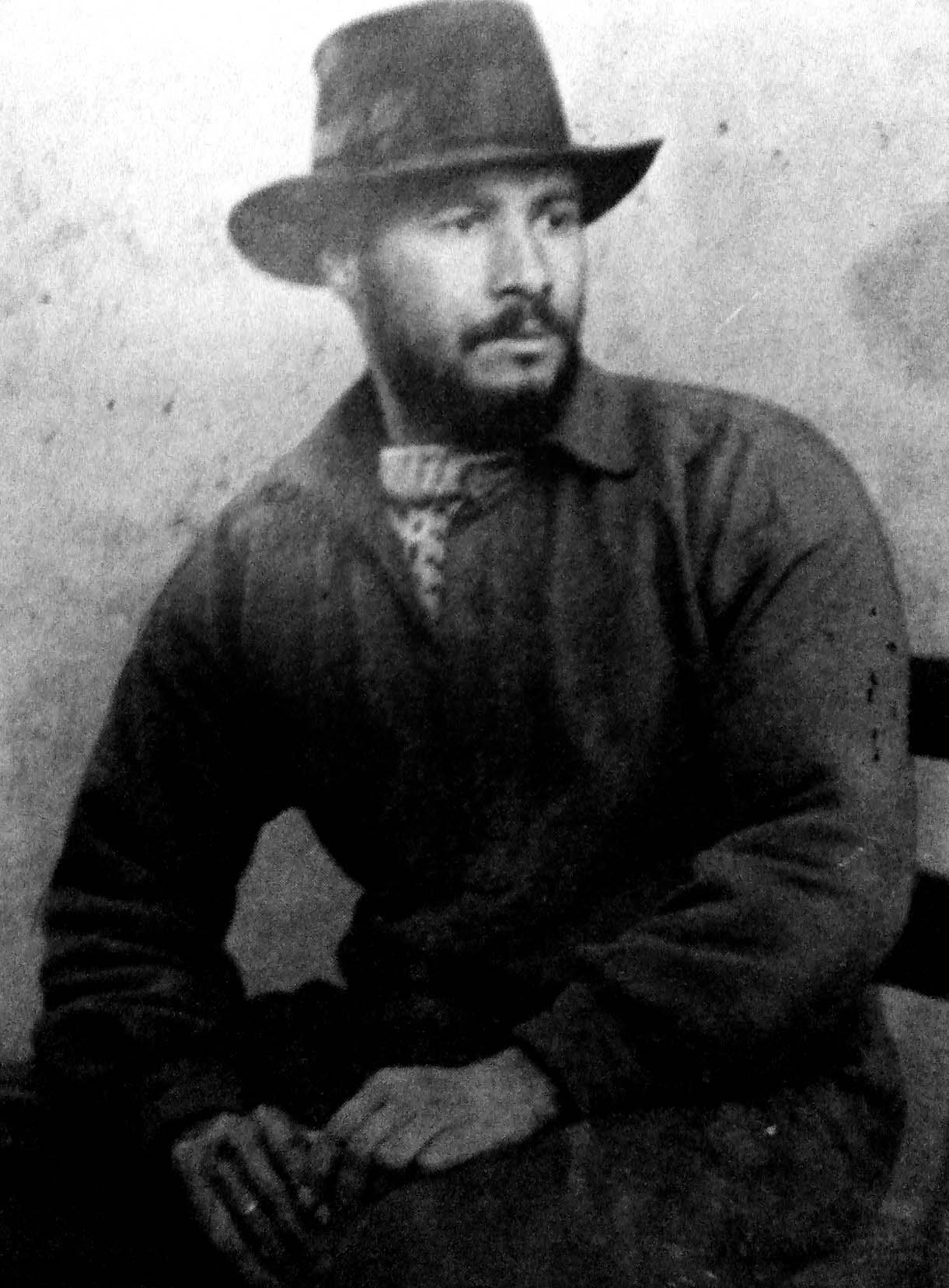
This year, the Smithsonian American Art Museum is displaying 34 paintings by the legendary African-American artist William H. Johnson. Part of his iconic Freedom Fighters series, the paintings document the Black experience in America and beyond through Johnson's point of view and his own innovative style that departed radically from his traditional training and Expressionist influences.
Almost every part of Johnson's story is unlikely. According to the Smithsonian American Art Museum, Johnson was born in the Jim Crow South in 1901 and showed an early aptitude for art that impressed his teachers, despite the lack of any art education at his segregated public school. After leaving the south for New York City as a teenager, he enrolled at the National Academy of Design and quickly distinguished himself as a brilliant and dedicated student who won nearly every award while balancing odd jobs to pay his tuition.
Johnson quickly achieved some commercial success after finishing his studies, and spent much of his early career abroad before returning to New York City in 1938 with his Danish wife. In the 1940s, he began work on Freedom Fighters — visual narratives about notable people who fought violence and oppression, painted in Johnson's distinctive abstract and simplified style. He felt it was his life's work and his destiny.
Some might say that we're lucky the paintings are still around — most were nearly discarded in the 1950s as Johnson's health deteriorated and his money ran out, but friends and benefactors intervened to preserve them.
But maybe luck had nothing to do with it, and it was destiny all along.

Rick Good spent ten years in the newspaper business, including with The News & Observer (Raleigh, NC) and The Greenville News (Greenville, SC). He co-wrote, with Melinda Coleman, Rutledge to Riley: Governors of South Carolina, 1776–Present (Published by The Greenville News), and is the author of Mind Games Trivia #1 (Amazon). He has recently spent 15 years creating original trivia content through Sounds Good Mobile Entertainment and continues that with his new company, SGME Software. He edits The Smart Reader’s money, real estate, and business coverage.