
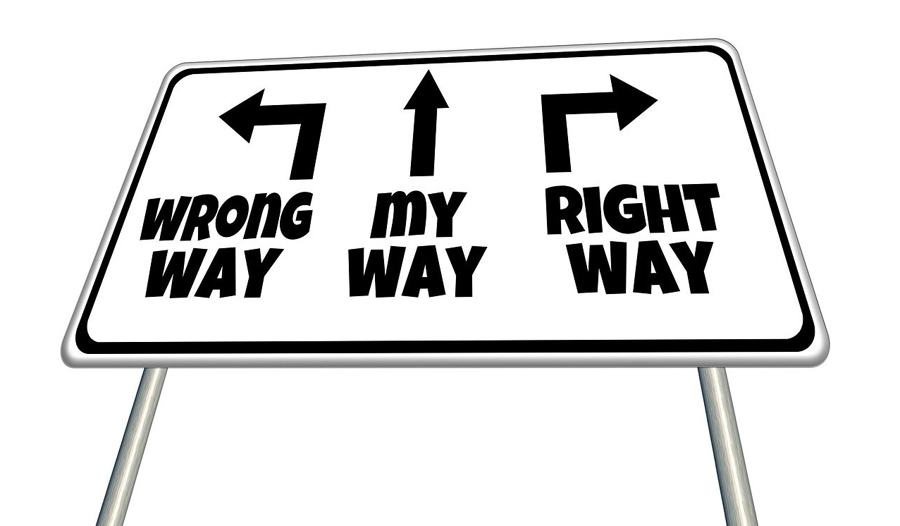
If you decide to take a drive in the United Kingdom, remember that the locals drive on the left (wrong?) side of the road. Ever wonder why most countries drive on the right (right?), but some opt for the left?
Turns out, swords and shields played an important role and for a long time, left was the default in many places.
Hundreds of years before the invention of automobiles, long-distance travel was relatively rare and much more dangerous. In many cases, folks on the move were knights heading to war. Traveling merchants, meanwhile, frequently employed guards to ward off highway brigands and protect valuable trade goods. Since most people are right-handed, guards would usually wield their swords with the right hand. Advancing on the left side of the road with swords drawn would automatically place them in a more effective position for combat. When wearing a sword, mounting and dismounting on the left is also easier.
As transportation changed and travel became simpler and safer, needs changed. Early wagons required a lot of hands-on control, which meant most wagon drivers preferred to be on the left side of the wagon, to give their right hand easy access to everything and room to move. Famously, Napoleon ordered the switch from left to right largely to spite the British. Many decades later, Henry Ford may have settled the issue for most roads when he put the driver's seat on the left side of his Model T, the car that popularized automobiles as a common mode of transportation.
The British government, however, stubbornly clung to the left side of the road. Today, about 35 percent of the global population still drives on the left. Besides the U.K., you'll find drivers on the left in Japan, New Zealand, Ireland, and various Caribbean islands.

Rick Good spent ten years in the newspaper business, including with The News & Observer (Raleigh, NC) and The Greenville News (Greenville, SC). He co-wrote, with Melinda Coleman, Rutledge to Riley: Governors of South Carolina, 1776–Present (Published by The Greenville News), and is the author of Mind Games Trivia #1 (Amazon). He has recently spent 15 years creating original trivia content through Sounds Good Mobile Entertainment and continues that with his new company, SGME Software. He edits The Smart Reader’s money, real estate, and business coverage.