Imagine tooling along on a beautiful day in your snazzy Cessna 177 Cardinal aircraft. You are having a little radio trouble, so you are fiddling with the controls when you hear a loud boom and your Cessna shivers.
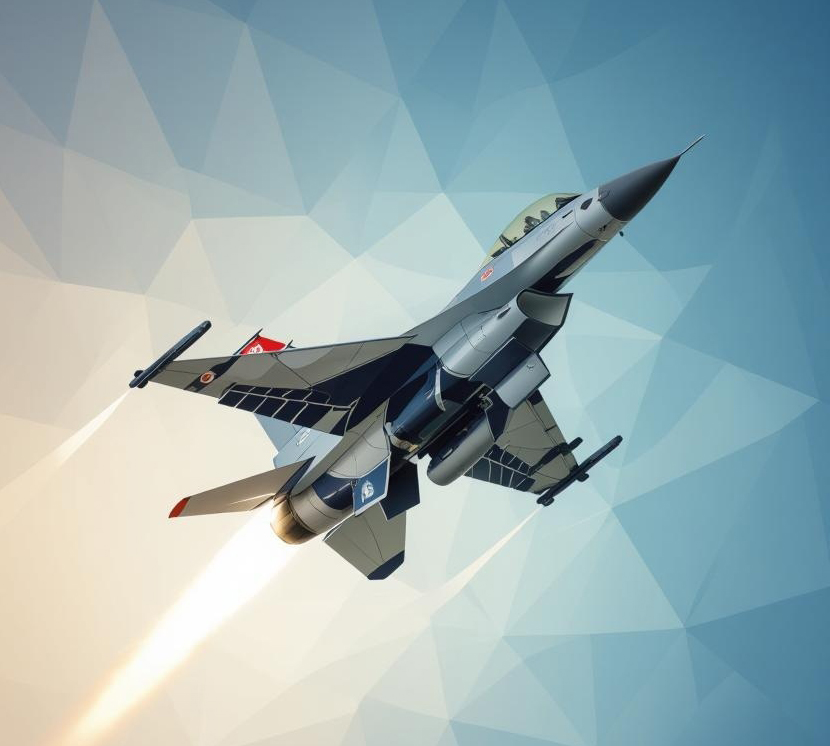
Naturally, you look up and just off your left wing is an F-16 fighter. Hello.
That's what the Air Force calls a 'one-time free air show.'
According to The Wall Street Journal's Andrew Tangel, what happens next is a rapid change of lifestyle. You are going to turn your plane around. You are going to land. You are going to have several conversations with the state police, and the Secret Service because, my friend, you just flew over the president's house — or close enough and in the restricted airspace.
That F-16 is part of the North American Aerospace Defense Command (NORAD). This year, as of late August, it has knocked on the wings of 37 civilian aircraft. That's a lot, considering that before 2017, NORAD had barely 40 interceptions per year.
There is more restricted airspace these days with more living president's and more big events, like the Super Bowl. President Trump's Bedminster golf club in New Jersey and Mar-a-Lago resort in Florida are newly restricted airspaces.
NORAD has never had to shoot down a private plane, but since the September 11, 2001 terror attacks, it's on the menu. Private pilots get the message pretty quickly. If they aren't paying attention, NORAD will shoot a flare at them. That usually helps. Or the F-16 can fly a block maneuver, which is said to be daunting.
The moral of the story: Always check for airspace restrictions.

Rick Good spent ten years in the newspaper business, including with The News & Observer (Raleigh, NC) and The Greenville News (Greenville, SC). He co-wrote, with Melinda Coleman, Rutledge to Riley: Governors of South Carolina, 1776–Present (Published by The Greenville News), and is the author of Mind Games Trivia #1 (Amazon). He has recently spent 15 years creating original trivia content through Sounds Good Mobile Entertainment and continues that with his new company, SGME Software. He edits The Smart Reader’s money, real estate, and business coverage.