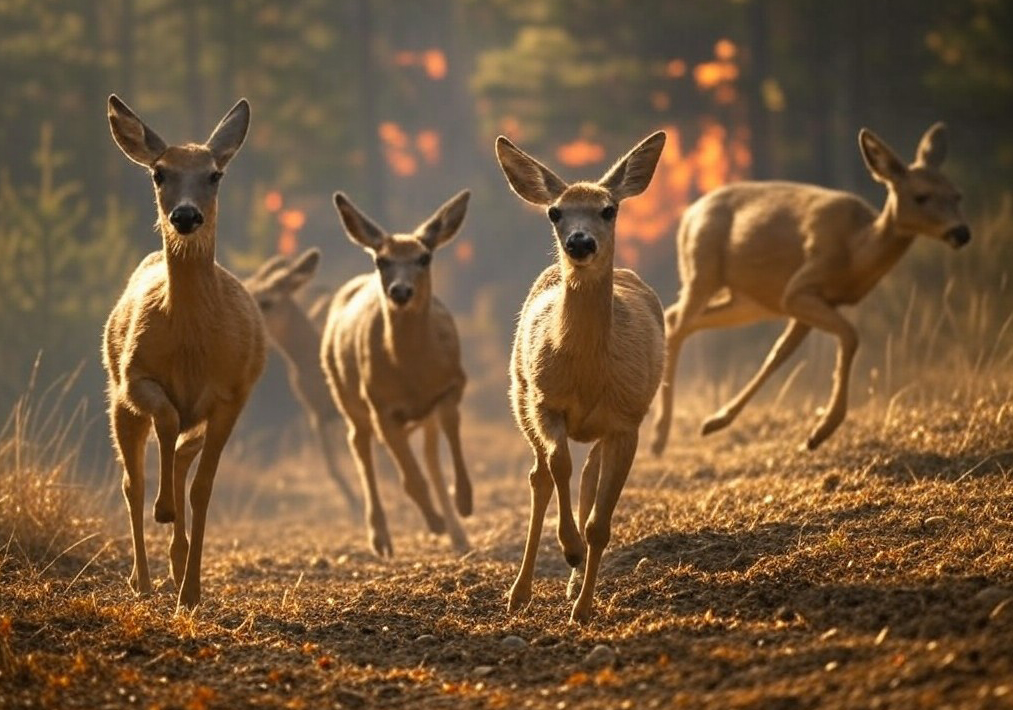
A wildfire takes a serious toll on wild animals, leaving them with scare food, habitat loss and injuries.
In the California wildfires, affected areas were home to bears, mountain lions, deer, and small animals like badgers and squirrels. Black bears typically give birth in January, so the timing of the wildfires is especially hard on this species.
For mammals, large and small, habitat loss is the first crisis. Small animals especially can't hid from predators and predators may take advantage of this. According to the National Forest Foundation, at the first sense of fire, animals run from the danger. Some stand in streams. Others take cover under rocks or bury themselves in the dirt.
Immediately after the main threat of flames retreats, wild animals face limited food availability. Many move into unfamiliar territory to find food.
Humans are more likely to see injured wild animals after a fire, some may be injured. The best thing humans can do is stay away, but leave out water. Leaving food may encourage a wild animal to stay instead of searching for other habitat.
Injured animals sometimes can be referred to wildlife rehabilitators, although in California some wildlife centers had to close due to the fire.

Rick Good spent ten years in the newspaper business, including with The News & Observer (Raleigh, NC) and The Greenville News (Greenville, SC). He co-wrote, with Melinda Coleman, Rutledge to Riley: Governors of South Carolina, 1776–Present (Published by The Greenville News), and is the author of Mind Games Trivia #1 (Amazon). He has recently spent 15 years creating original trivia content through Sounds Good Mobile Entertainment and continues that with his new company, SGME Software. He edits The Smart Reader’s money, real estate, and business coverage.