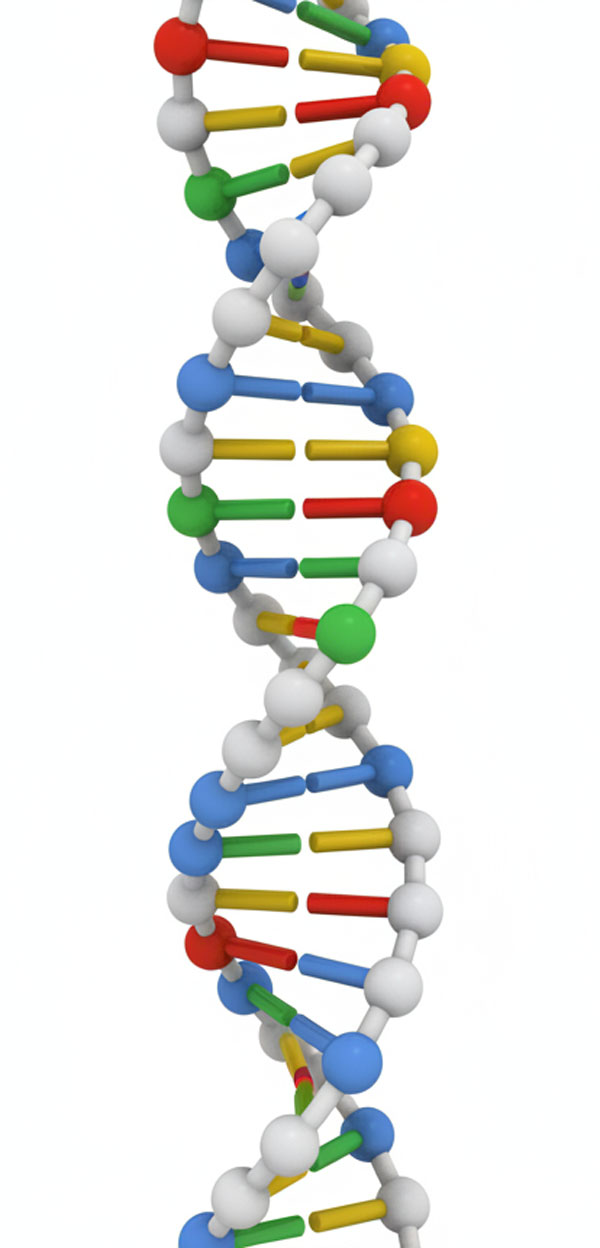
In one of the strangest scientific cases on record, a Washington State woman's DNA tests repeatedly showed she was not the mother of her children, even though she genuinely gave birth to them.
A new book by Lise Bareoud called, Hidden Guests, , explores an odd case in which Lydia Fairchild, 26 in 2002, was given a routine maternity test as part of an application for welfare benefits. The test showed she was not the mother of her two children. A criminal investigation was launched to investigate the identity of the children. Were they kidnapped? Was the mother, in fact, a surrogate who kept the children? Fairchild was terrified she would lose her kids, according to Live Science.
She searched for attorneys. They believed the DNA. They didn't believe her. Finally, she found an attorney who did believe her and Fairchild was retested. Her hair, skin, cheek cells showed she was not the mother. But a cervical smear produced cells with an entirely different DNA profile that matched the children and their grandmother.
The conclusion? Fairchild carries two types of DNA, her own and that of a fraternal twin absorbed into a single individual in the womb: a chimera. She was both the mother and the aunt of her children.
Since then, a dozen similar cases have been discovered. But author Bareoud cautions against the conceit that we know everything about DNA. In fact, we do not.

Rick Good spent ten years in the newspaper business, including with The News & Observer (Raleigh, NC) and The Greenville News (Greenville, SC). He co-wrote, with Melinda Coleman, Rutledge to Riley: Governors of South Carolina, 1776–Present (Published by The Greenville News), and is the author of Mind Games Trivia #1 (Amazon). He has recently spent 15 years creating original trivia content through Sounds Good Mobile Entertainment and continues that with his new company, SGME Software. He edits The Smart Reader’s money, real estate, and business coverage.