
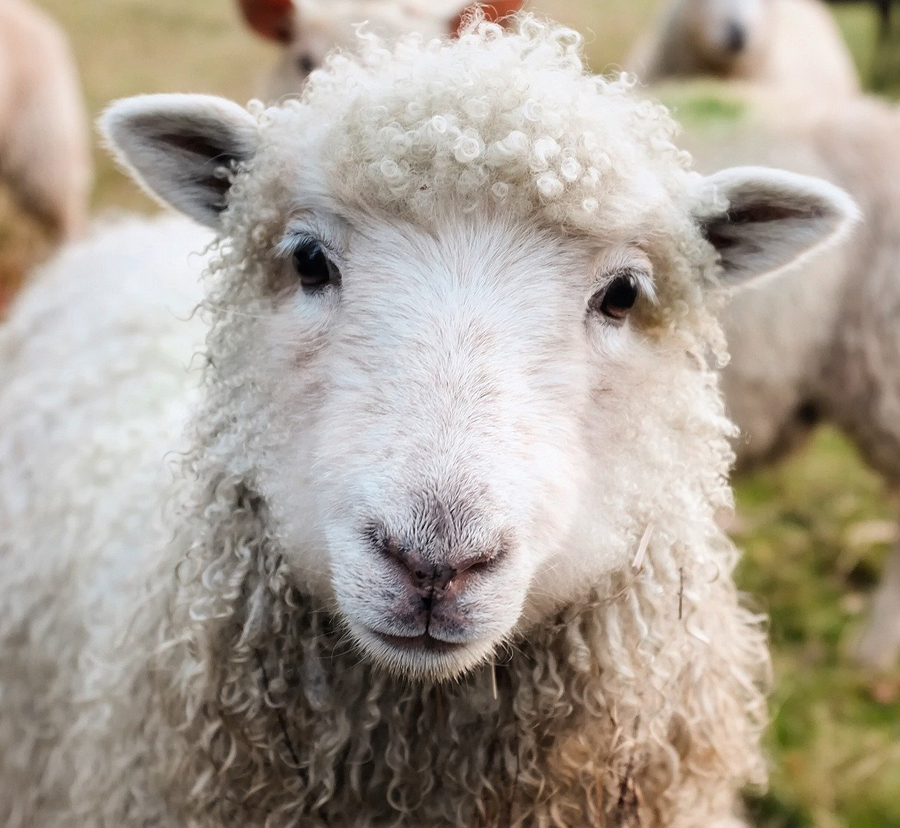
When you break out your warm clothes every winter or fondly remember the hand-knitted sweaters that your grandmother made for you when you were a kid, take a second to thank the humble sheep. For millennia, these fluffy and unassuming creatures have allowed us to shave them bald each year so that we can create clothing, blankets, furnishings, and more with their wool — one of the most valuable and useful fibers on Earth.
Estimates vary, but according to the International Wool Textile Association, humans started selectively breeding woolly sheep as far back as the Stone Age, around 6,000 BC Fast-forward to the Bronze Age (2,300 to 600 BC) and sheep that resembled modern breeds were common throughout western Asia. Even in antiquity, wool was big business, and multiple ancient Greek sources describe large-scale sheep farming and wool production. The Romans prized wool as well, and spread the tradition with them throughout Europe — a tradition that flourished even as the Empire fell. Across the Middle East, Europe, North Africa and increasingly far-flung regions, people wove, knitted and felted wool to create an endless array of indispensable clothing and household items.
Why exactly has wool been so popular for so long? For centuries, it was frequently cheaper and more accessible than plant-based fibers like linen, and durable woolen fabrics were often better-suited for daily manual labor. With its limited heat transfer properties, wool also protects the wearer against heat and cold, and its natural oils (combined with the right manufacturing method) make it more resistant to stains and the elements.

Rick Good spent ten years in the newspaper business, including with The News & Observer (Raleigh, NC) and The Greenville News (Greenville, SC). He co-wrote, with Melinda Coleman, Rutledge to Riley: Governors of South Carolina, 1776–Present (Published by The Greenville News), and is the author of Mind Games Trivia #1 (Amazon). He has recently spent 15 years creating original trivia content through Sounds Good Mobile Entertainment and continues that with his new company, SGME Software. He edits The Smart Reader’s money, real estate, and business coverage.