
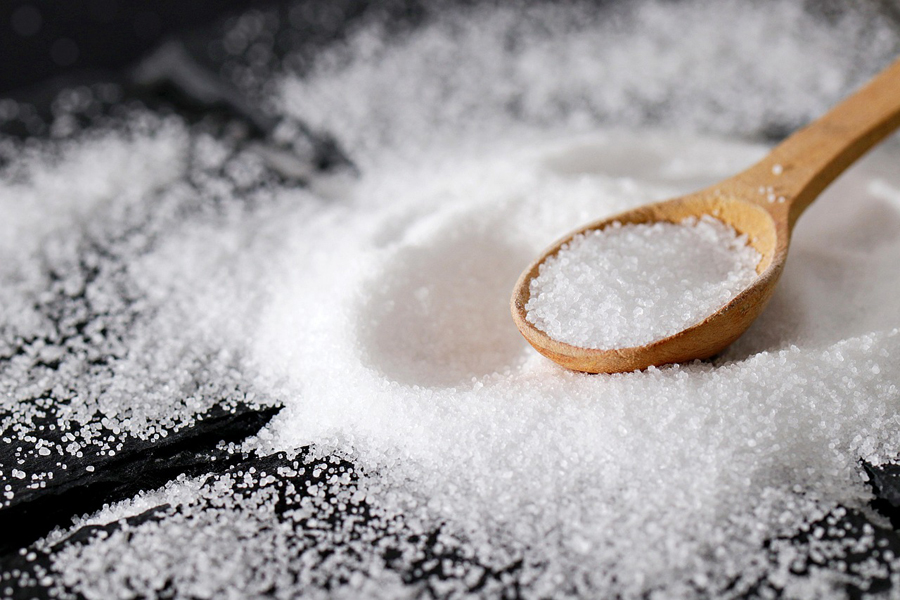
In time out of mind, the earth was covered with oceans, and when the oceans receded they left behind huge deposits of salt.
In fact, we know salt has been part of the human experience since 6050 BC, according to Salt Works. In recorded history, salt was part of Chinese pharmacology by 2700 BC.
Today salt is mined from underground deposits — the salt of seas from long ago.
Some salt, sea salt, is manufactured by evaporating salt water — exactly the same process that occurred eons ago.
According to the Mayo Clinic, sea salt and table salt have exactly the same nutritional value. Chemists know all kinds of salt as sodium chloride.
Sea salt usually contains trace materials such as minerals and is usually coarser. Table salt is ground into fine grains and trace materials are removed.
You might have noticed another type of salt: Kosher salt.
This is a salt with large flaky crystals, different from the fine grains of table salt. It does not contain anti-caking agents or iodine.
There are actually two kinds of kosher salt. The first is Kosher Style Salt, usually created through evaporation. The second is called Kosher Certified Salt is processed under religious supervision.
You'll find kosher salt is often called for in seasoning meats and vegetables, in pickling, and smoking of meats. You'll also find it around the glass rim on Margaritas.

Rick Good spent ten years in the newspaper business, including with The News & Observer (Raleigh, NC) and The Greenville News (Greenville, SC). He co-wrote, with Melinda Coleman, Rutledge to Riley: Governors of South Carolina, 1776–Present (Published by The Greenville News), and is the author of Mind Games Trivia #1 (Amazon). He has recently spent 15 years creating original trivia content through Sounds Good Mobile Entertainment and continues that with his new company, SGME Software. He edits The Smart Reader’s money, real estate, and business coverage.