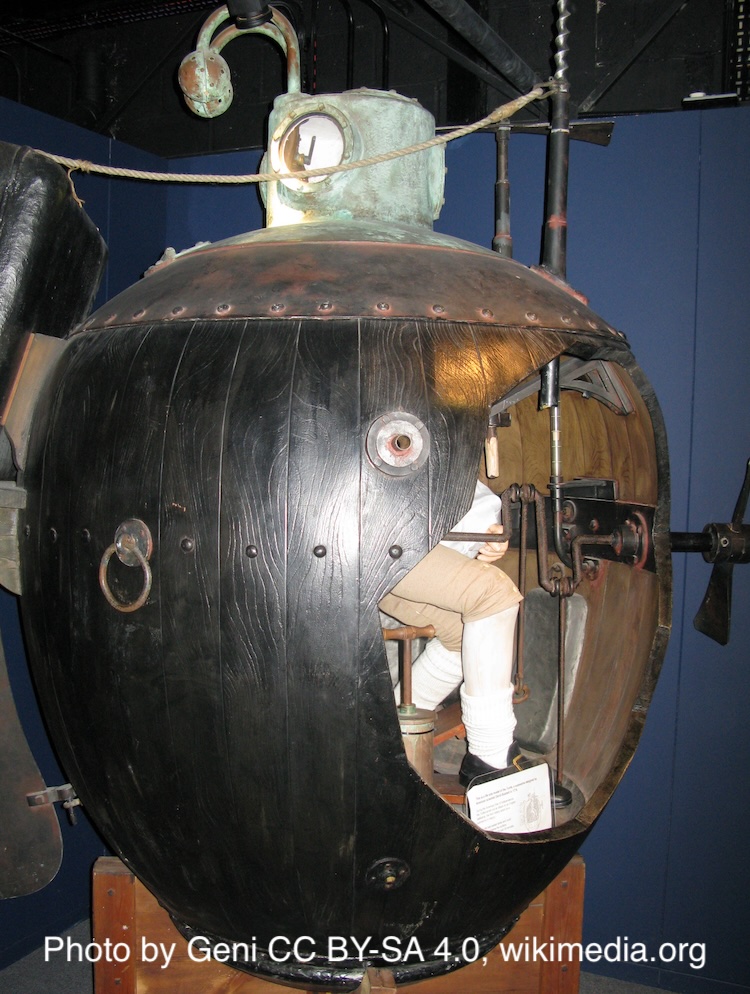
The first submarine attack in history did not involve steel, engines, or torpedoes. It involved a hand-cranked wooden barrel, a single exhausted volunteer, and a glowing piece of cork.
On the night of September 6, 1776, according to the American Battlefield Trust, a Connecticut inventor named David Bushnell sent his strange craft into New York Harbor. Called the Turtle for its shape, the one-man submersible was built of oak, sealed with tar, and propelled by hand and foot cranks that turned small propellers. It submerged by letting water in and surfaced by pumping it back out. To read his instruments in the dark, the pilot relied on a piece of naturally glowing bioluminescent cork.
The plan was audacious. Sergeant Ezra Lee would pilot the Turtle beneath HMS Eagle, flagship of the British fleet blockading the harbor, and screw an explosive charge into its hull. According to History.com, Lee spent two hours pedaling out to the ship, then tried to bore into its bottom — only to strike a band of iron he could not get through. As dawn approached, he gave up and released the charge, which exploded harmlessly in the water.
The mission failed, and every later attempt failed too. That fall the British sank the sloop carrying the Turtle, and the little submarine vanished from history. But George Washington, who had helped fund it, judged the attempt “an effort of genius.” He was right about that much: the age of undersea warfare had begun in a barrel off the tip of Manhattan.

Briefs and quick reads selected and edited by The Smart Reader’s editorial team.