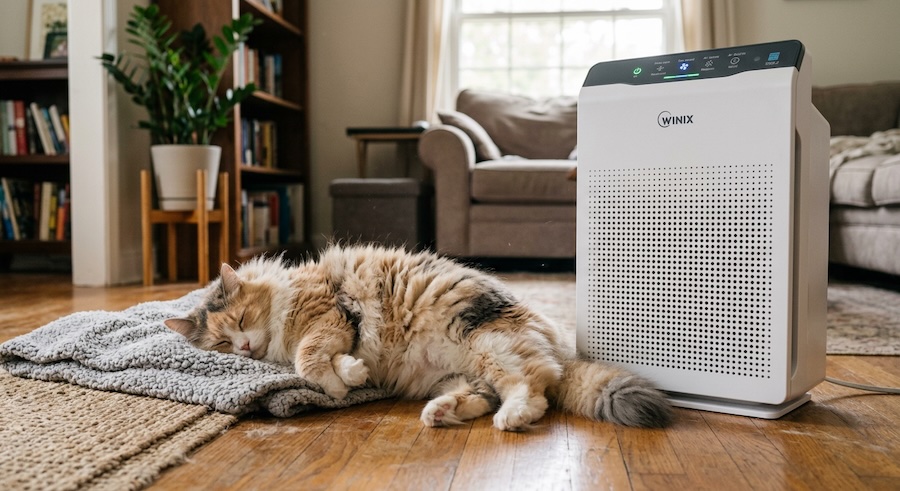
An air cleaner can be a big help for people with allergies, but there are some things it won’t do.
It will not lower the radon in your basement, according to the Environmental Protection Agency. It will not fix a mold problem, and it will not do much about the fumes from fresh paint or a new carpet. No air cleaner removes everything.
What a good one will do is pull particles out of the air: pollen, dust, pet dander, mold spores, wildfire smoke.
The number to look for is the CADR, or clean air delivery rate, verified by the Association of Home Appliance Manufacturers. It tells you how much clean air the machine delivers per minute, with separate scores for smoke, dust and pollen. AHAM’s rule of thumb: the CADR should be at least two-thirds of the room’s square footage. A 300-square-foot bedroom wants a CADR of 200 or better.
Buy a true HEPA filter, which traps 99.97 percent of particles down to 0.3 microns. Be wary of “HEPA-type” and “HEPA-like,” which mean almost nothing. Add an activated carbon layer if odors are the problem. Skip ozone generators — the EPA warns that ozone irritates the lungs and does a poor job on pollutants anyway. Look for CARB certification, California’s ozone safety standard.
Cigarette smoke is the hard case. The visible haze is particles a HEPA filter can catch, but the smell is a gas that slips straight through — only activated carbon adsorbs it. No purifier can pull the smell out of walls, curtains and upholstery.
Then check these two costs: replacement filters, which can run $50 to $100 a year, and noise. A loud one is a nuisance.

Allyson Good curates senior living, health, and family content. She is formerly the Managing Editor of Active Life, a print newspaper published in 2016-2017 for seniors, choosing practical articles on health, money, safety, and everyday living for older readers. She is also an avid gardener and offers up Garden Hints and Tips on a regular basis.