
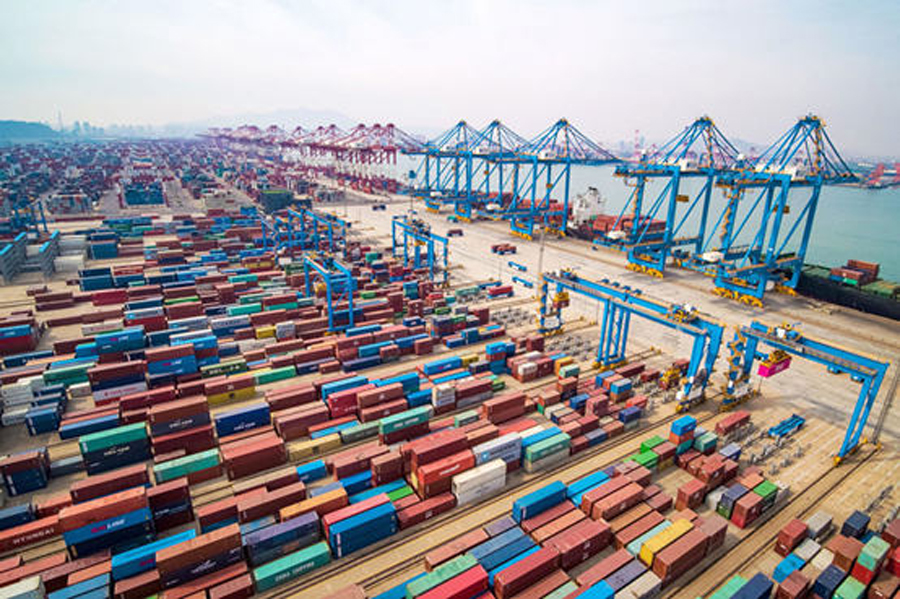
The U.S. dockworkers strike in October not only emphasized U.S. dependence on goods from overseas, but also how far behind the U.S. has fallen in mechanization.
China has invested heavily in port infrastructure and technology, making their ports some of the most advanced in the world. China's Port of Qingdao in Shandong Province became an unmanned terminal in 2019. Workers who once operated cranes lifting containers onto ships now work as remote monitoring personnel, according to the Chinese People's Daily.
The Port of Shanghai, which is the busiest container port globally, features extensive use of automated guided vehicles (AGVs), automated stacking cranes, and other advanced technologies to streamline operations and increase efficiency.
In contrast, while some U.S. ports have adopted automation and mechanization, the level of investment and implementation varies widely. Ports like the Port of Los Angeles and the Port of Long Beach have made strides in automation, but overall, U.S. ports tend to lag behind their Chinese counterparts in terms of mechanization and technological advancement. This difference can be attributed to various factors, including regulatory environments, labor union agreements, and differing levels of investment in port infrastructure.

Rick Good spent ten years in the newspaper business, including with The News & Observer (Raleigh, NC) and The Greenville News (Greenville, SC). He co-wrote, with Melinda Coleman, Rutledge to Riley: Governors of South Carolina, 1776–Present (Published by The Greenville News), and is the author of Mind Games Trivia #1 (Amazon). He has recently spent 15 years creating original trivia content through Sounds Good Mobile Entertainment and continues that with his new company, SGME Software. He edits The Smart Reader’s money, real estate, and business coverage.