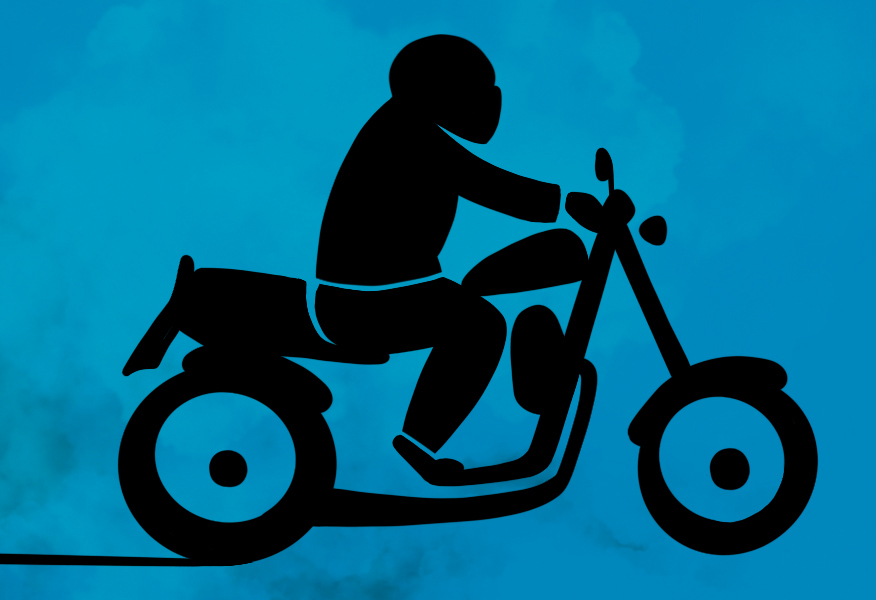
When driving during the summer, turn on your cycle vision to keep yourself and motorcyclists safe on the road.
Drivers with cycle vision are consciously aware of motorcycles and recognize potential crash risks.
When motorcycle crashes occur, about 75 percent involve the collision of a motorcycle and a passenger car. More than half of these crashes happen because the motorist can't see the motorcycle or doesn't see it soon enough to respond correctly.
Cycle vision practices
* Expect to see motorcycles any time you are on the road. Responsible driving includes paying special attention to motorcycles.
* Give motorcycles the same roadway space that you give other vehicles. Allow a two to three second safety cushion between you and a motorcycle. Increase it to four or five seconds when road or weather conditions are bad.
* Let the motorcyclist know well in advance of your intention to stop, turn, or change lanes. Don't speed up when a motorcycle is passing you. Never cut in too closely after passing one.
Typical problem situations:
* Intersections. The most frequent cause of motorcycle accidents is a motorist turning left in front of an oncoming motorcycle.
* Two lanes of traffic traveling in the same direction. Motorcycles may be difficult to see and are vulnerable to collisions when they change lanes, pass cars, or when cars pass them.
* Bad weather. Give motorcyclists a break — the weather affects them more.

Rick Good spent ten years in the newspaper business, including with The News & Observer (Raleigh, NC) and The Greenville News (Greenville, SC). He co-wrote, with Melinda Coleman, Rutledge to Riley: Governors of South Carolina, 1776–Present (Published by The Greenville News), and is the author of Mind Games Trivia #1 (Amazon). He has recently spent 15 years creating original trivia content through Sounds Good Mobile Entertainment and continues that with his new company, SGME Software. He edits The Smart Reader’s money, real estate, and business coverage.