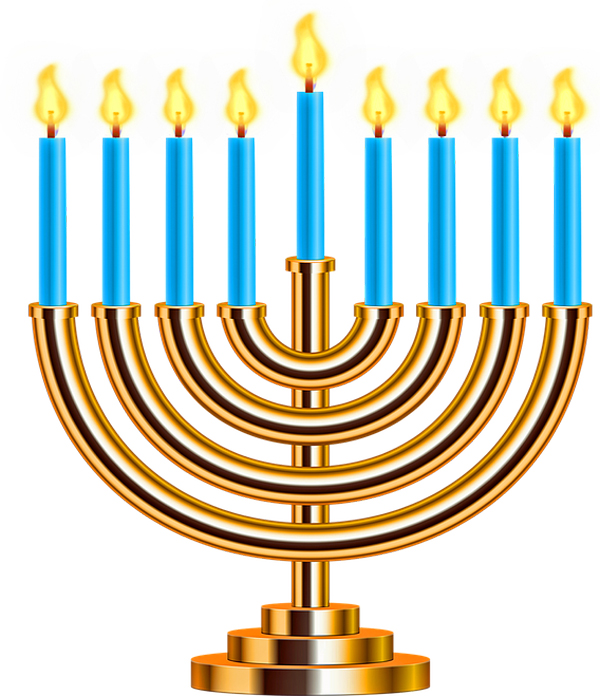
The enchanting Hanukkah menorah isn't the only menorah used in Jewish art, design, and ritual.
In Hebrew, menorah simply means lamp and there are several kinds of menorahs used for different purposes.
The menorah most well-known in the West is the 9-branched Hanukkah Menorah (called hanukkiah), a candelabrum used during the 8-day festival of Hanukkah. A candle is set on each branch and lit progressively each night to commemorate the miracle of the oil in which one day's supply of oil lasted 8 days in 164 BC. In the center is a helping candle used to light the others.
These lovely symbols of the season are often artistic, made of ceramics or metal and can be family heirlooms and treasures.
One of the most significant menorahs is the original seven-branched Temple Menorah, described in Exodus. This menorah stood in the first and second temples in Jerusalem where it was lit daily by priests. Today it is not lit for ritual purposes, but it is used as a national emblem of Israel, featured on the Israeli coat of arms.
The Ner Tamid Menorah is a 7-branched electric version of the ancient Temple menorah, representing the eternal flame. This is a synagogue menora.
Other lamps, or menorahs, include the Shabbat & Yom Tov menorahs, 2-branched candle holders that hold Shabbat candles. These two candles are for lit for remembrance and observance of the Sabbath.
A single-flame candle holder, the Memorial or Yahrzeit menorah is used to remember a loved one on the anniversary of death or on Yom Kippur.

Rick Good spent ten years in the newspaper business, including with The News & Observer (Raleigh, NC) and The Greenville News (Greenville, SC). He co-wrote, with Melinda Coleman, Rutledge to Riley: Governors of South Carolina, 1776–Present (Published by The Greenville News), and is the author of Mind Games Trivia #1 (Amazon). He has recently spent 15 years creating original trivia content through Sounds Good Mobile Entertainment and continues that with his new company, SGME Software. He edits The Smart Reader’s money, real estate, and business coverage.