This Fourth of July, before you fire up the grill, here is a little secret most cooks never learn: boneless pork ribs are not ribs.
The cut, also called country-style ribs, was essentially invented by American butchers. The story goes that in the 1950s a Chicago butcher named Cliff Bowes was looking at the fatty, awkward blade end of the pork loin, a section that sold poorly mainly because it looked unappetizing in the case. He sliced the meat into long, rib-shaped strips and named them country-style ribs. By the 1980s, with demand booming, butchers started cutting them from pork shoulder too. Today most "boneless ribs" at the grocery store come from the shoulder, the same cut used for pulled pork.
This matters for tenderness. The shoulder is one of the toughest, fattiest, most connective-tissue-heavy parts of the pig. To get it tender, the meat has to be cooked long and slow at low heat. Connective tissue dissolves into gelatin around 165'F to 200'F. Rush it, and you get chewy pork.
That is why your George Foreman grilled country ribs are tough. A contact grill cooks hot and fast, which is great for thin, tender cuts like ribeye or chicken cutlets, but it slams the door on tough shoulder meat. The ribs hit safe temperature long before the collagen has time to break down.
There are two ways to fix it.
1 Simmer and grill. Simmer the ribs first in broth or apple juice for 30 to 40 minutes until fork-tender. Then sear them on the Foreman grill for 3 to 4 minutes per side, basting with barbecue sauce in the last minute. You get tenderness from the simmer and char from the grill.
2 oven-then-grill. Season the ribs, place them in a covered pan with a splash of liquid, and bake at 300'F for about two hours, or 325'F for 90 minutes. Then finish on any hot grill, outdoor, indoor, or under the broiler, for a few minutes with sauce.
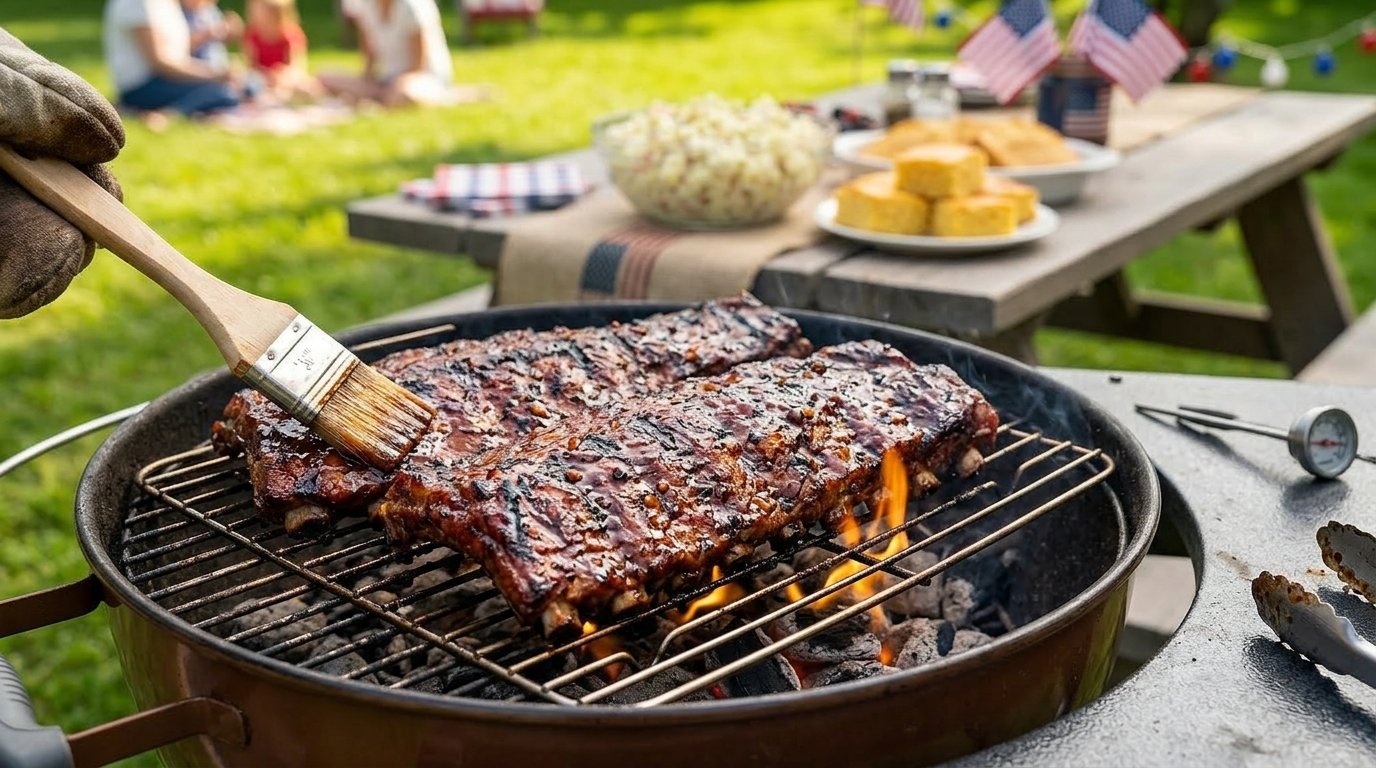
For the outdoor grill alone. Set up for indirect heat at around 275'F. Place the ribs on the cool side, cover, and cook for about 2.5 hours. Wrap in foil with a splash of apple juice and cook another 30 minutes. Then unwrap, sauce, and finish over direct heat for the char.
The trick with this cut is always the same: low and slow first, hot and fast last. Skip the slow part and the meat fights back.

Rick Good spent ten years in the newspaper business, including with The News & Observer (Raleigh, NC) and The Greenville News (Greenville, SC). He co-wrote, with Melinda Coleman, Rutledge to Riley: Governors of South Carolina, 1776–Present (Published by The Greenville News), and is the author of Mind Games Trivia #1 (Amazon). He has recently spent 15 years creating original trivia content through Sounds Good Mobile Entertainment and continues that with his new company, SGME Software. He edits The Smart Reader’s money, real estate, and business coverage.