
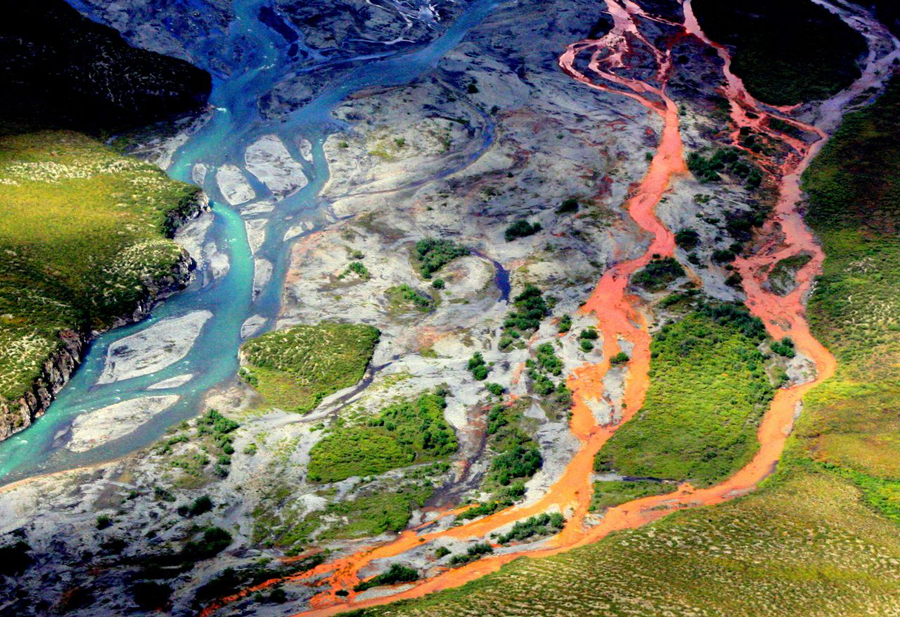
Orange tide? Rivers changing colors in Alaska
Imagine a beautiful river winding through a pristine forest. What color is that river? Most people would answer blue, and they would usually be right.
But in some parts of Alaska, rivers are turning orange. What's the deal? Turns out that large quantities of metals and other potentially toxic substances are flowing into waterways, possibly from melting permafrost.
Orange rivers may seem out of this world, but they're actually somewhat common in certain areas. Parts of California and the Appalachian mountains have long had rivers running orange and other bright colors. Often, activity was centered around mines, which tend to create a lot of runoff rich in metals and other substances. The occurrence in Alaska has thrown off some scientists, however, because until recently, the phenomenon was quite rare in the northernmost state. Further, the adulteration is taking place far away from mines and other potential human sources.
The metals and other substances tinting the rivers aren't new to the region, but they've been locked away in the permafrost for many centuries. Left to its own devices, water will always try to run downhill (or down through the earth). When the permafrost melts, it creates snowmelt that will then make its way to rivers, lakes, oceans, and other bodies of water. As it does, the snowmelt may take toxic chemicals along for the ride.
What's the cause? Some researchers point to climate change and suggest that the arctic may be warming four times as fast as many other regions of the world. From 2017 to 2018, occurrences of tainted rivers spiked, coinciding with then record-breaking temperatures.

Briefs and quick reads selected and edited by The Smart Reader’s editorial team.