We saw it everywhere in 1967 during the Summer of Love. Painted on VW buses, along with lots of round flowers, and it became a symbol of a generation.
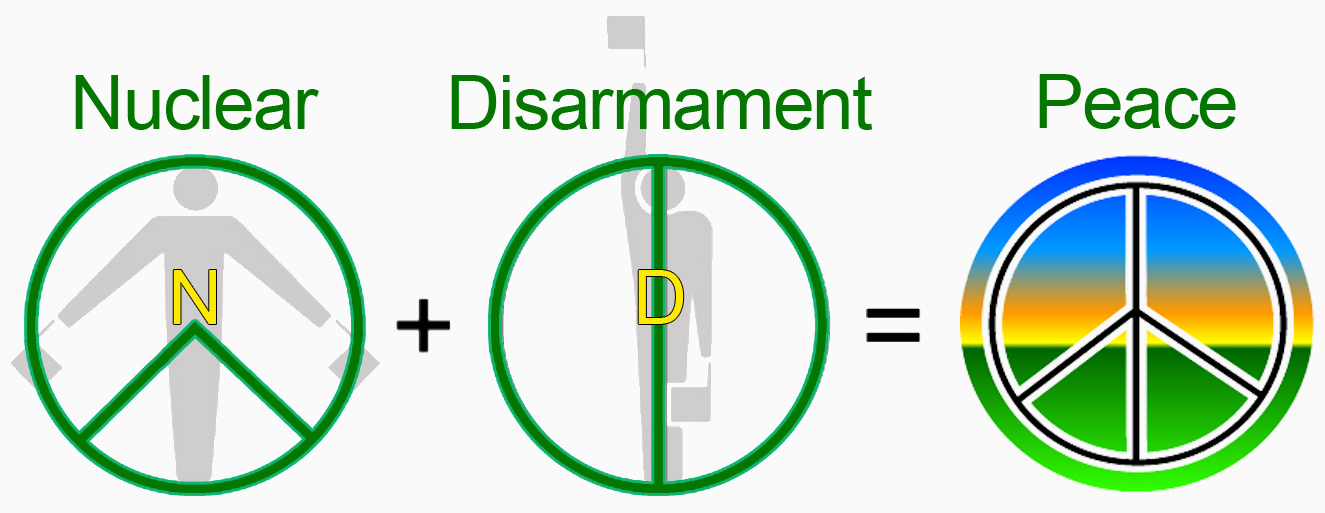
But the peace sign wasn't cooked up by a hippie in San Francisco and it didn't originally mean peace. In fact, the sign was created in 1958 to convey a specific message: nuclear disarmament.
Arguably, the peace sign is one of the most recognizable symbols in the world, and it was created by designer and pacifist Gerald Holtom for one particular protest march. That was the 1958 Campaign for Nuclear Disarmament in London. The group wanted some sort of symbol to make the message stronger.
The symbol wasn't just Holtom's random doodle. In fact, it is a combination of two flag signals in the semaphore alphabet, used by sailors to communicate at a distance. The first signal is N, where the flags are held in an upside down V. The next signal is D, where the flagman stands straight and holds one flag up, forming a straight line. Put together, they form the iconic symbol.
The symbol was so powerful that it transcended its initial meaning. It filled a niche. Anyone could draw it and before long, millions of people did. Over time, it evolved into a symbol used by countercultures of all kinds. Hippies adopted it to signify peace. It has also been used as a sign of justice.
Ken Kolsbun, a peace symbol historian, says the symbol is sometimes unwittingly drawn without the bottom center line — which is actually the Mercedes logo. The Mercedes logo was adopted in 1909, long before the peace symbol, according to CNN.

Allyson Good curates senior living, health, and family content. She is formerly the Managing Editor of Active Life, a print newspaper published in 2016-2017 for seniors, choosing practical articles on health, money, safety, and everyday living for older readers. She is also an avid gardener and offers up Garden Hints and Tips on a regular basis.