Approximately one percent of adults stutter. Men are affected four times more often than women. For many of them, finding qualified help has historically been as much a geographic problem as a medical one.
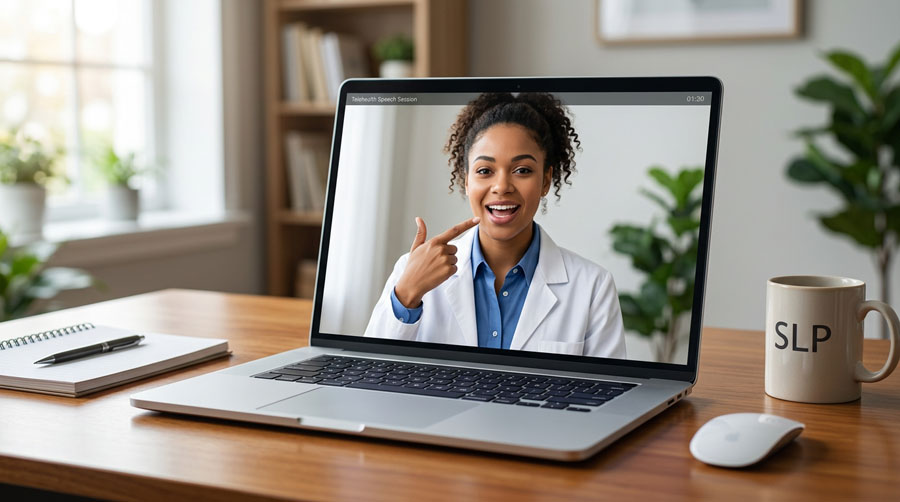
Telehealth, the delivery of healthcare services via video platforms on computers, tablets, or smartphones, has changed that equation in meaningful ways. A patient connects with a clinician remotely in real time, conducting a session that looks and functions much like an in-person appointment, minus the waiting room. For routine medical consultations, telehealth has become familiar and widely accepted. For stuttering treatment specifically, its impact has been particularly significant.
Speech-language pathologists who specialize in stuttering are relatively rare and unevenly distributed. Before telehealth, a person in a rural area might have access only to a general speech therapist without specific stuttering expertise. Today, that same person can work with a leading specialist anywhere in the country from their own home.
There is an additional practical benefit: stuttering is context-sensitive, often worsening under social pressure. Therapy conducted in a familiar, comfortable environment can reduce performance anxiety, making sessions more productive and the skills learned more transferable to everyday life.
For a condition that affects millions, that is a significant development.

Rick Good spent ten years in the newspaper business, including with The News & Observer (Raleigh, NC) and The Greenville News (Greenville, SC). He co-wrote, with Melinda Coleman, Rutledge to Riley: Governors of South Carolina, 1776–Present (Published by The Greenville News), and is the author of Mind Games Trivia #1 (Amazon). He has recently spent 15 years creating original trivia content through Sounds Good Mobile Entertainment and continues that with his new company, SGME Software. He edits The Smart Reader’s money, real estate, and business coverage.