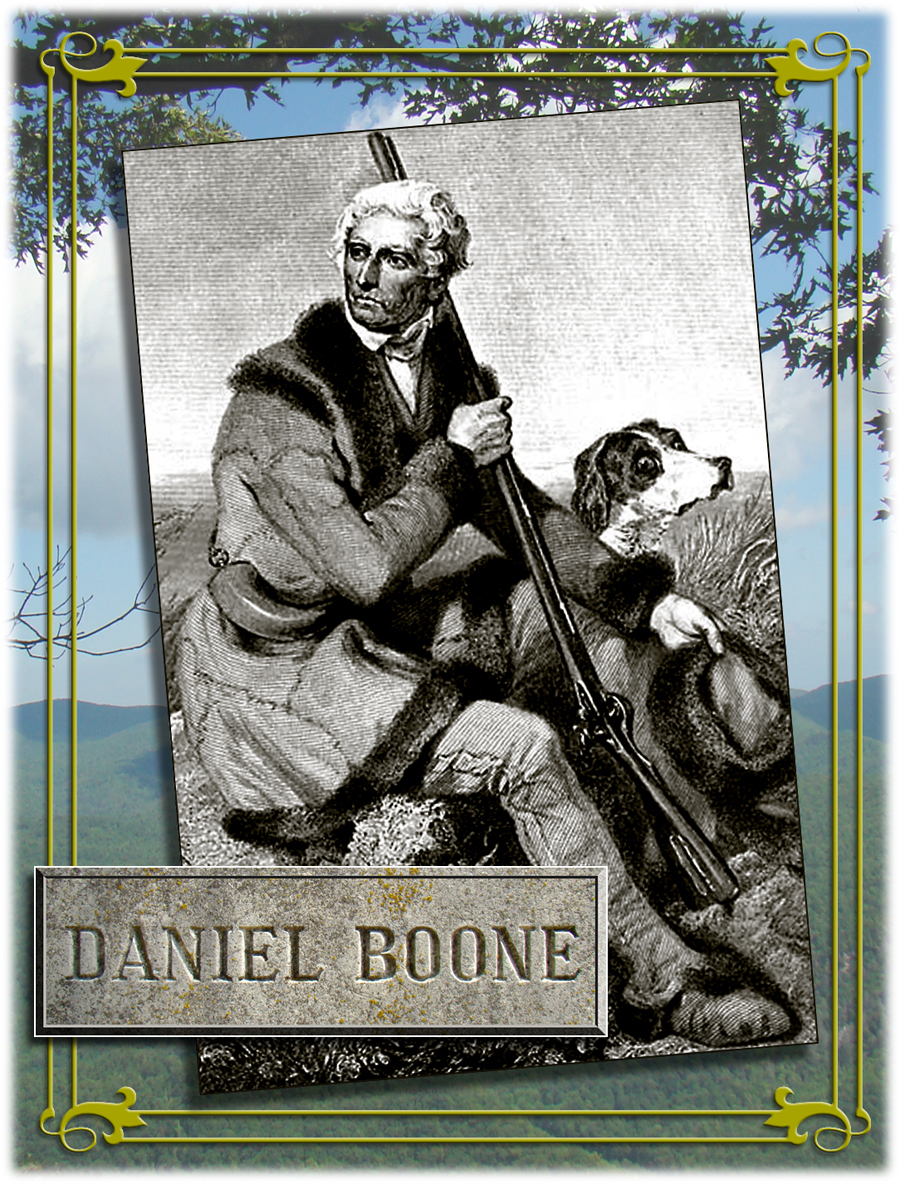
In a 1960 television series, Daniel Boone was called "the rippin'est, roarin'est, fightin'est man the frontier ever knew." Though many of the stories told about Boone are based on a little truth and a lot of fiction, there are enough known facts to make him a memorable pioneer hero.
The sixth of 11 children, Boone was born in 1734 near the present-day city of Reading, Pa. He is best known for his explorations into Kentucky, opening the Bluegrass State to early settlers.
In 1769, Boone and his followers traversed the Cumberland Gap, a passage through the Cumberland Mountains where the states of Tennessee, Kentucky and Virginia come together. He spent two years making a trail for settlers, which led to a clash with the Shawnee, who claimed the area for hunting ground.
In 1775, with a party of settlers in tow, Boone and his men blazed what became Wilderness Road, a combination of existing Native trails and new routes. It reached from Northern Virginia to what is now Louisville, Ky. He founded the frontier outpost of Boonesborough, and when Kentucky became a county of Virginia, he became a major in the militia.
While in Boonesborough, the Shawnee kidnapped his daughter, but Boone was able to rescue her two days later. The Shawnee later captured Boone himself, and some sources say he was adopted into their tribe as the son of Chief Blackfish.
Not only was Boone an explorer, he also served three terms in the Virginia legislature. But 10 years later, the call of unknown territory lured him again.
In 1798, as his dugout canoe passed Cincinnati, someone asked why he was leaving Kentucky. "Too crowded," was his answer. He moved on to Missouri, where he and his wife, Rebecca lived the rest of their lives. He died at age 85, three years after his wife's death. Today, they are buried on a bluff in Kentucky in the land that he helped to settle.

Rick Good spent ten years in the newspaper business, including with The News & Observer (Raleigh, NC) and The Greenville News (Greenville, SC). He co-wrote, with Melinda Coleman, Rutledge to Riley: Governors of South Carolina, 1776–Present (Published by The Greenville News), and is the author of Mind Games Trivia #1 (Amazon). He has recently spent 15 years creating original trivia content through Sounds Good Mobile Entertainment and continues that with his new company, SGME Software. He edits The Smart Reader’s money, real estate, and business coverage.