How to get through a multi-day power outage
It does not take a wildfire or a hurricane to leave a house dark for days. A summer thunderstorm, an ice storm, or an overtaxed grid can do it — and a little planning turns a dangerous ordeal into a manageable inconvenience.
Start with food and water. According to the U.S. Department of Agriculture, an unopened refrigerator keeps food safe for about four hours, and a full freezer holds its temperature for roughly 48 hours, or 24 if it is half full. Keep the doors shut, and when in doubt, throw it out. Store at least one gallon of water per person per day.
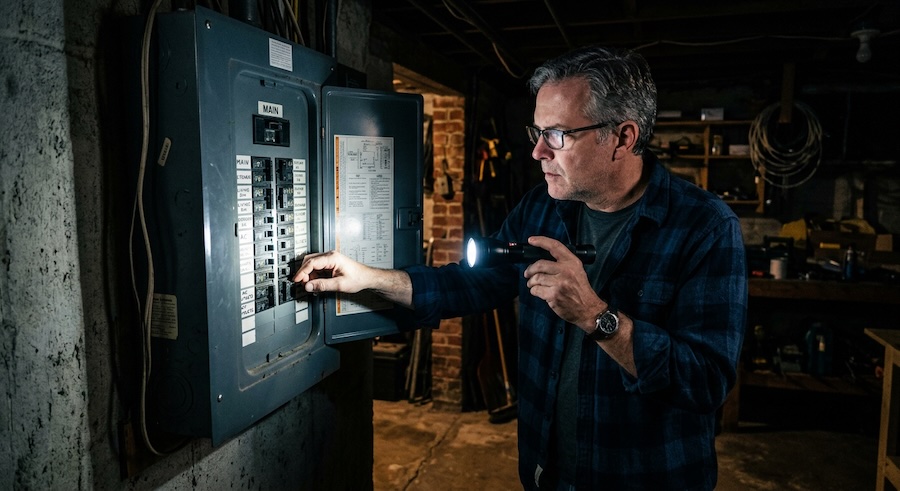
Light the house with flashlights, not candles, which are a leading cause of house fires during outages. Keep phones charged, and add a power bank and a battery-powered radio so you can still reach family and follow the news.
The deadliest mistake is bringing a generator too close. According to Ready.gov, generators, camp stoves, and grills must run outdoors only, at least 20 feet from any window, door, or vent — never in a garage, even with the door open. Their exhaust carries carbon monoxide, an invisible gas that kills hundreds of Americans a year. Never heat a home with a gas oven, for the same reason.
Plan ahead for anyone who depends on electricity. Have a backup for power-dependent medical devices, know that refrigerated medicines such as insulin should be replaced if an outage runs long, and check on older neighbors, who are the most vulnerable when the heat or air conditioning stops.
Keep some cash on hand, too. When the power is out, card readers and ATMs go dark along with the lights.

Briefs and quick reads selected and edited by The Smart Reader’s editorial team.