
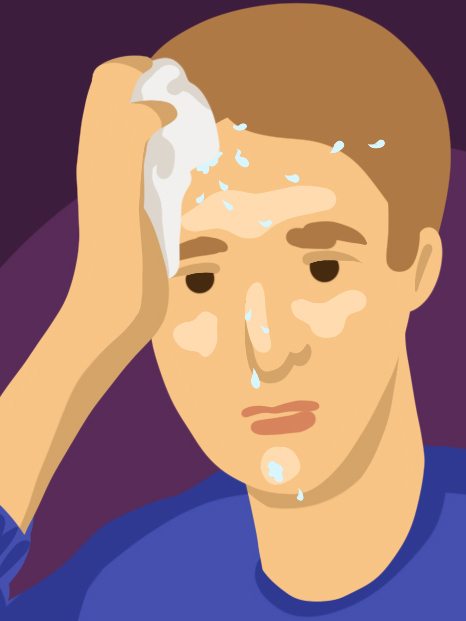
Sweating is our body's central air conditioning system, a normal and necessary response that regulates our core temperature and maintains our body's equilibrium. But there can always be too much of a good thing, and sometimes that excessive sweat is a red flag that you shouldn't ignore.
Excessive sweating is common for people who have infections, take medications (such as certain antidepressants) or are going through hormonal changes like menopause. Another cause is hyperhidrosis, which can affect the hands, feet, underarms, and face, sometimes without any obvious trigger like heat or exercise.
Heavy sweating can also be a warning sign. Seek medical attention right away if your excessive sweating is accompanied by pain in the chest, throat, jaw, arms, or shoulders; or if you have cold skin and a rapid pulse.
Tips to manage your excessive sweat:
* Choose loose-fitting clothing with moisture-wicking properties.
* Stick to antiperspirants that contain aluminum compounds. Apply when the skin is completely dry — not damp.
* Stay in well-ventilated and air-conditioned spaces to stay cool.
Your physician may also be able to help with excessive sweating when antiperspirant and wicking clothing aren't enough. A variety of medical treatments are available for excessive sweating and hyperhidrosis:
* Prescription-strength antiperspirants
* Iontophoresis treatment, which blocks sweat glands with an electrical current
* Botox injections to temporarily deactivate sweat glands
* miraDry treatment, which targets and destroys sweat glands
Health insurance does not always cover treatment for excessive sweating, so check your benefits and budget accordingly. In some cases, especially excessive sweating in the hands, surgery can provide immediate relief.

Rick Good spent ten years in the newspaper business, including with The News & Observer (Raleigh, NC) and The Greenville News (Greenville, SC). He co-wrote, with Melinda Coleman, Rutledge to Riley: Governors of South Carolina, 1776–Present (Published by The Greenville News), and is the author of Mind Games Trivia #1 (Amazon). He has recently spent 15 years creating original trivia content through Sounds Good Mobile Entertainment and continues that with his new company, SGME Software. He edits The Smart Reader’s money, real estate, and business coverage.