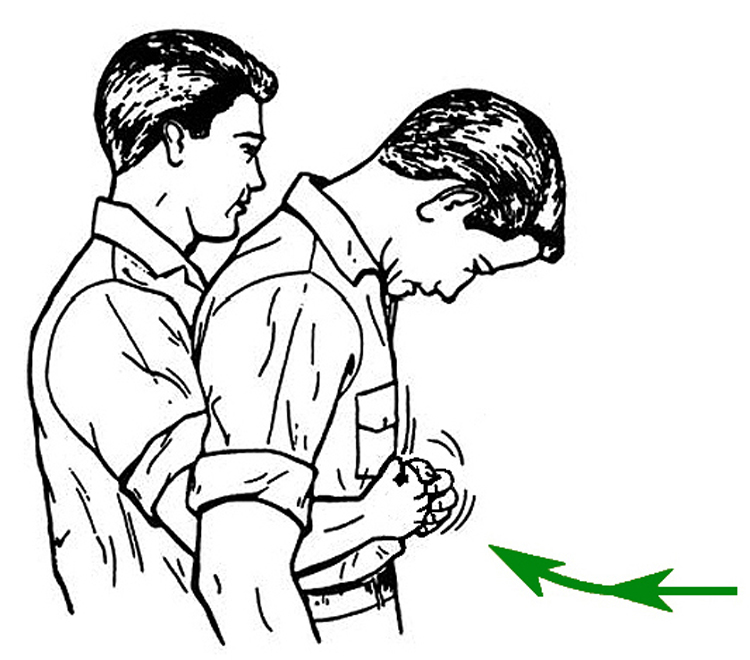
The Heimlich maneuver (now more commonly called abdominal thrusts) has not been discredited as an effective technique for relieving choking in conscious adults and children over one year old.
It remains a recommended and widely taught first-aid method by major organizations like the American Heart Association (AHA) and others.
However, there has been some controversy surrounding it:
The latest AHA Guidelines for CPR and Emergency Cardiovascular Care (released October 2025) recommend alternating five back blows followed by five abdominal thrusts for conscious choking adults and children (over 1 year). This "five and five" approach continues until the object is expelled or the person becomes unresponsive. For infants, it's five back blows alternated with five chest thrusts (abdominal thrusts are not recommended for infants due to injury risk). This marks an update where back blows are now explicitly included again as the starting step for many protocols.
Dr. Henry Heimlich promoted abdominal thrusts aggressively starting in the 1970s, often criticizing back blows as dangerous ("death blows") and claiming they could worsen the obstruction by driving the object deeper. He influenced guidelines, and from 1986 to 2005, the AHA and American Red Cross recommended only abdominal thrusts. In 2006, the Red Cross shifted to "five and five," partly due to evidence that back blows are safe and effective, and to avoid over-relying on one method. The term "Heimlich maneuver" was largely phased out in favor of "abdominal thrusts" in official guidance.
Some criticism stems from Heimlich himself: He pushed unproven uses (e.g., for drowning, asthma), which were discredited, and there were allegations of questionable tactics in promoting it, like funding studies to support his views. But this doesn't invalidate the core technique for choking'it's still evidence-based and effective when done correctly.
Effectiveness today: Both back blows and abdominal thrusts generate pressure to expel the blockage, and studies show neither is definitively superior'the combination is now favored in many protocols for better outcomes and lower risk (e.g., less chance of rib/injury issues with thrusts alone). Abdominal thrusts are still key for many cases, especially if back blows fail.

Rick Good spent ten years in the newspaper business, including with The News & Observer (Raleigh, NC) and The Greenville News (Greenville, SC). He co-wrote, with Melinda Coleman, Rutledge to Riley: Governors of South Carolina, 1776–Present (Published by The Greenville News), and is the author of Mind Games Trivia #1 (Amazon). He has recently spent 15 years creating original trivia content through Sounds Good Mobile Entertainment and continues that with his new company, SGME Software. He edits The Smart Reader’s money, real estate, and business coverage.