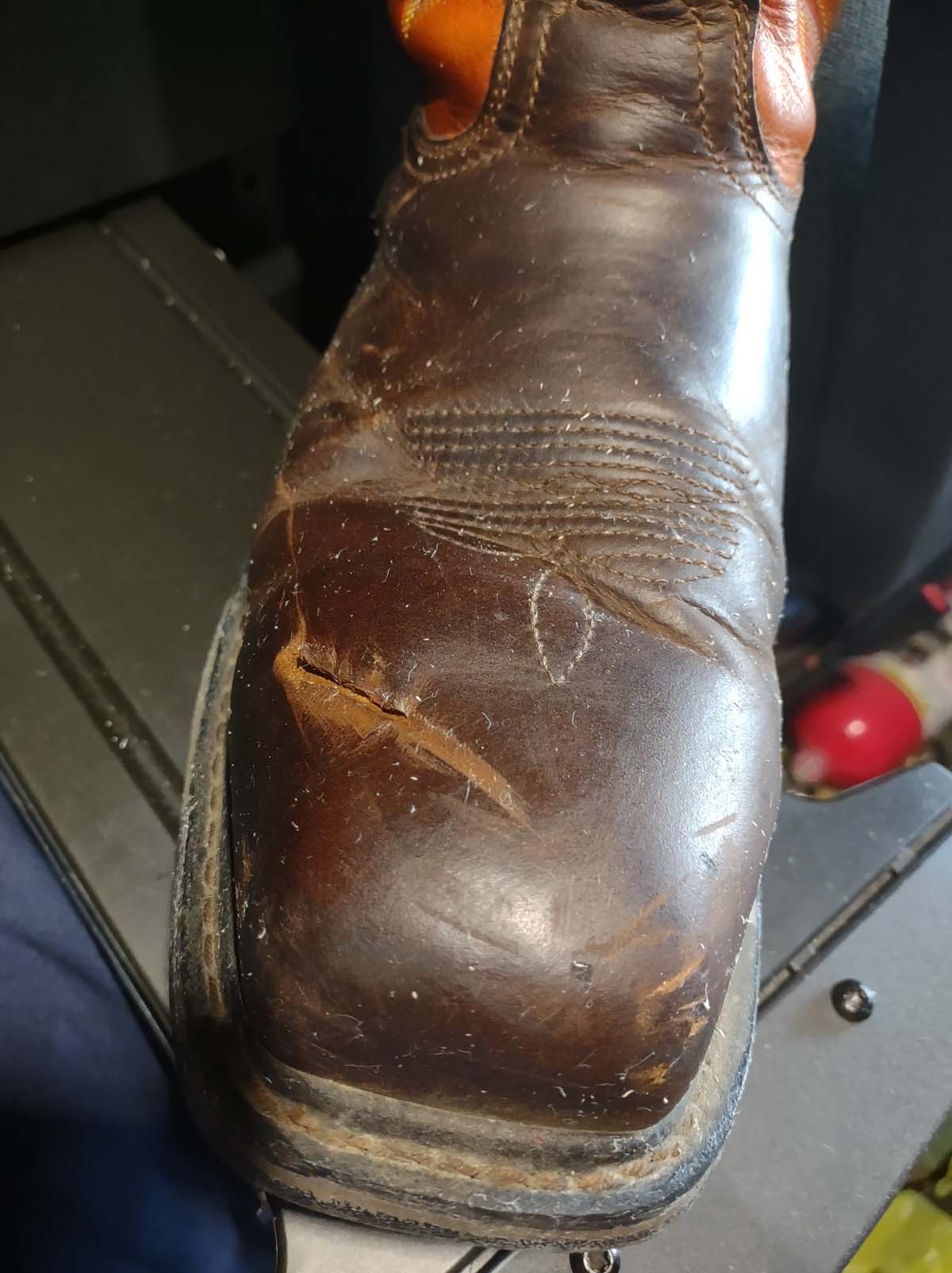
One driver of an 80,000 pound tractor trailer rig had a big surprise waiting for him one morning as he pulled on his steel-toed boots.
One boot had a deep slash through the leather. He didn't even know it was there. He didn't remember how it even happened. What, he wondered, would have happened to him if he had followed the latest fashion among truck drivers: flip flops.
In fact, drivers everywhere are talking about those who wear flip flops while driving and fueling. It has become a trend.
Some drivers, especially younger ones, prefer flip flops or even slippers to work boots, saying they are comfortable, keep their feet cool, and are easy to flick on and off inside and outside the truck. Videos show drivers wearing drivers wearing flip flops in snowy weather, tackling tasks outside their trucks. On docks, some drivers even put on a hard hats, a safety vest, but remain in their flip flops.
No federal Department of Transportation rules specify footwear, but companies with many drivers often have footwear regulations. UPS, for example, insists on sturdy, non-slip black or brown shoes.
Still, drivers on long routes, or owner operators, usually choose their clothing and footwear. Choosing flip flops can be dangerous, drivers say.
Isaac Stephens, who has a YouTube trucking channel, is not a fan. He features videos of drivers wearing flip flops in all sorts of precarious situations. One clip showed a driver climbing up on the hood of the truck to wash the windows, begging the question of how the driver climbed down that wet hood.
Some types of loads really require substantial foot protection, drivers say. But other drivers might get away with a lighter shoe. There are a lot of choices. Some shoes from athletic shoe companies such as Reebok, Keen, Fila and Sketchers combine a low-profile lightweight, breathable style with non-slip soles and steel-reinforced toes.

Rick Good spent ten years in the newspaper business, including with The News & Observer (Raleigh, NC) and The Greenville News (Greenville, SC). He co-wrote, with Melinda Coleman, Rutledge to Riley: Governors of South Carolina, 1776–Present (Published by The Greenville News), and is the author of Mind Games Trivia #1 (Amazon). He has recently spent 15 years creating original trivia content through Sounds Good Mobile Entertainment and continues that with his new company, SGME Software. He edits The Smart Reader’s money, real estate, and business coverage.