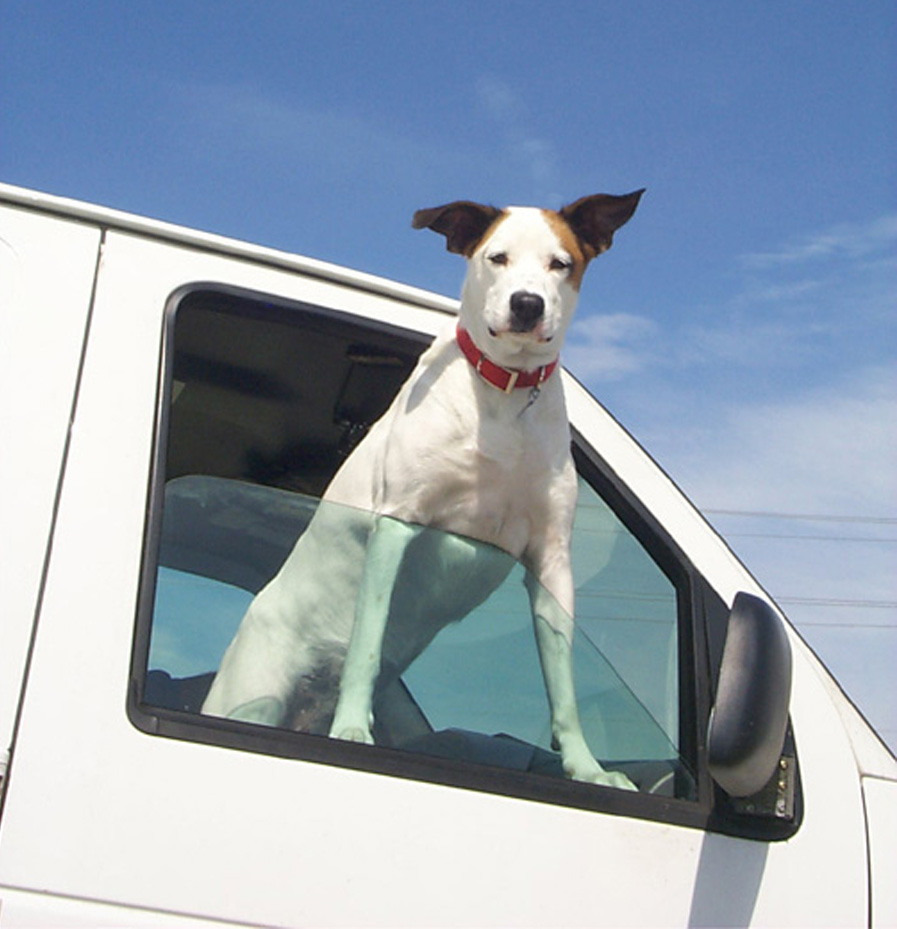
Some dogs ride in a car pretty much like a person does. They will sit next to the driver and look out the window. Still, if they spot another dog, especially one they don't like, they could bark like mad and jump all over the car. And if they land in the driver's lap, they can obstruct vision or make it difficult to maintain control of the car.
About 60 percent of dog owners have driven while distracted by pets who were passengers, according to a survey by the American Automobile Association. Only about one in six dog owners use a restraint, such as a harness or pet vehicle seat.
Restraints can keep a pet from distracting the driver, and in a crash, they can also protect the pet and other occupants of the car.
A 10-pound dog in a crash at 50 mph will exert 500 pounds of force on whatever it strikes. An 80-pound dog in a crash at just 30 mph will exert 2,400 pounds. Further, unrestrained dogs distract drivers by interfering with the ability to steer or by crawling onto the foot pedals.
At the American Society for the Prevention of Cruelty to Animals, they recommend restraints for dogs and cats. The best way to think about it is to compare the dog to having a child in the car.
About 40 percent of American households have a dog, according to the American Pet Products Association. Dogs are like members of the family and often ride with them in their cars.
Dogs need to buckle up just as people do — but you have to do it for them.

Rick Good spent ten years in the newspaper business, including with The News & Observer (Raleigh, NC) and The Greenville News (Greenville, SC). He co-wrote, with Melinda Coleman, Rutledge to Riley: Governors of South Carolina, 1776–Present (Published by The Greenville News), and is the author of Mind Games Trivia #1 (Amazon). He has recently spent 15 years creating original trivia content through Sounds Good Mobile Entertainment and continues that with his new company, SGME Software. He edits The Smart Reader’s money, real estate, and business coverage.