
There were no crowds of enthusiastic onlookers to cheer the return of a secret space plane in March, but U.S. Space Force personnel are now releasing some information about the X-37B.
After 434 days orbiting the Earth and completing its classified tasks, the robotic spaceplane dipped through the atmosphere and landed on Runway 12 at Vandenberg Space Force Base in California. According to Ars Technica, the return, just like the mission itself, was a closely kept secret.
Thus concluded the seventh X-37B mission, which began at Vandenberg on Dec. 29, 2023, according to Live Science. It wasn't the longest mission to date — the spacecraft previously spent 909 days in space between May 2020 and Nov. 2022 — but this time the federal government has offered some rare disclosures about what the unmanned X-37B can really do.
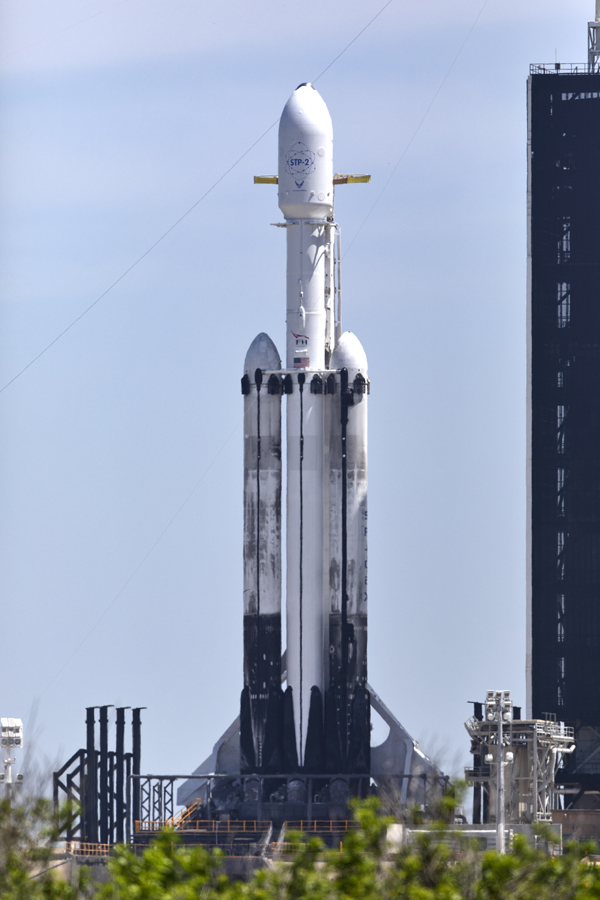
For this mission, the Space Force chose a more powerful rocket than it had for previous missions — the Space X Falcon Heavy rocket, which provided extra power to propel the space plane greater distances as it completed its work. And unlike other spacecraft that jettison their payload and contribute to the growing problem of hazardous floating "space junk" that clutters Earth's magnetic field, the X-37B returned with the Falcon Heavy still attached, intact and reusable.
The space plane conducted "aerobraking" maneuvers for the first time during this mission, which are designed to alter a spacecraft's orbit while minimizing fuel burn. Instead, the test vehicle angled its wings into the uppermost reaches of the atmosphere at specific points to gradually slow down and bring its orbit closer to the planet.
Specific mission goals remain classified, but broadly speaking, this mission was designed to improve the Space Force's ability to defend space if warfare ever goes there.

Briefs and quick reads selected and edited by The Smart Reader’s editorial team.