
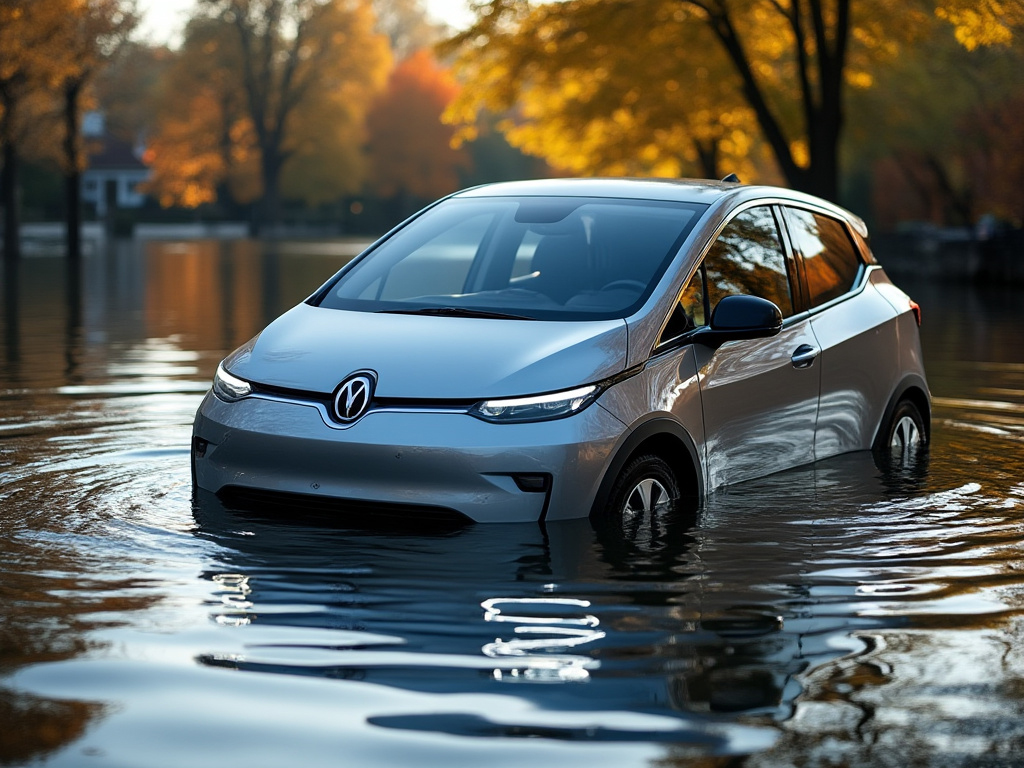
The battery in an electric vehicle can sometimes catch fire if it comes into contact with water, a risk that matters for people in areas prone to hurricanes and flooding.
In normal circumstances, about 25 out of every 100,000 EVs catch fire annually, according to AutoInsuranceEZ. That number is not necessarily high. For every 100,000 gas-powered cars, about 1,500 fires are reported every year, usually due to fuel leaks or crashes.
However, in areas prone to flooding or hurricanes, EVs do increase the risk of fire within the vehicle itself and to the surrounding buildings.
Security cameras caught the beginning of a devastating fire in the aftermath of Hurricane Helene this year. An EV burst into flames in a garage after salt water flowed into the structure. The blaze took the car and garage in less than a minute and then went on to burn down the house.
Never drive or leave an EV parked in an area prone to flooding, according to Florida fire rescue officials. EVs should be moved to higher ground well before inclement weather and be parked at least 50 feet from buildings.
If an EV stalls in rising waters, do not attempt to restart it. Get out of the vehicle immediately and move to higher ground. When the threat passes, contact your insurance company. Do not attempt to start or operate the vehicle until it is inspected by an authorized repair shop.

Rick Good spent ten years in the newspaper business, including with The News & Observer (Raleigh, NC) and The Greenville News (Greenville, SC). He co-wrote, with Melinda Coleman, Rutledge to Riley: Governors of South Carolina, 1776–Present (Published by The Greenville News), and is the author of Mind Games Trivia #1 (Amazon). He has recently spent 15 years creating original trivia content through Sounds Good Mobile Entertainment and continues that with his new company, SGME Software. He edits The Smart Reader’s money, real estate, and business coverage.