
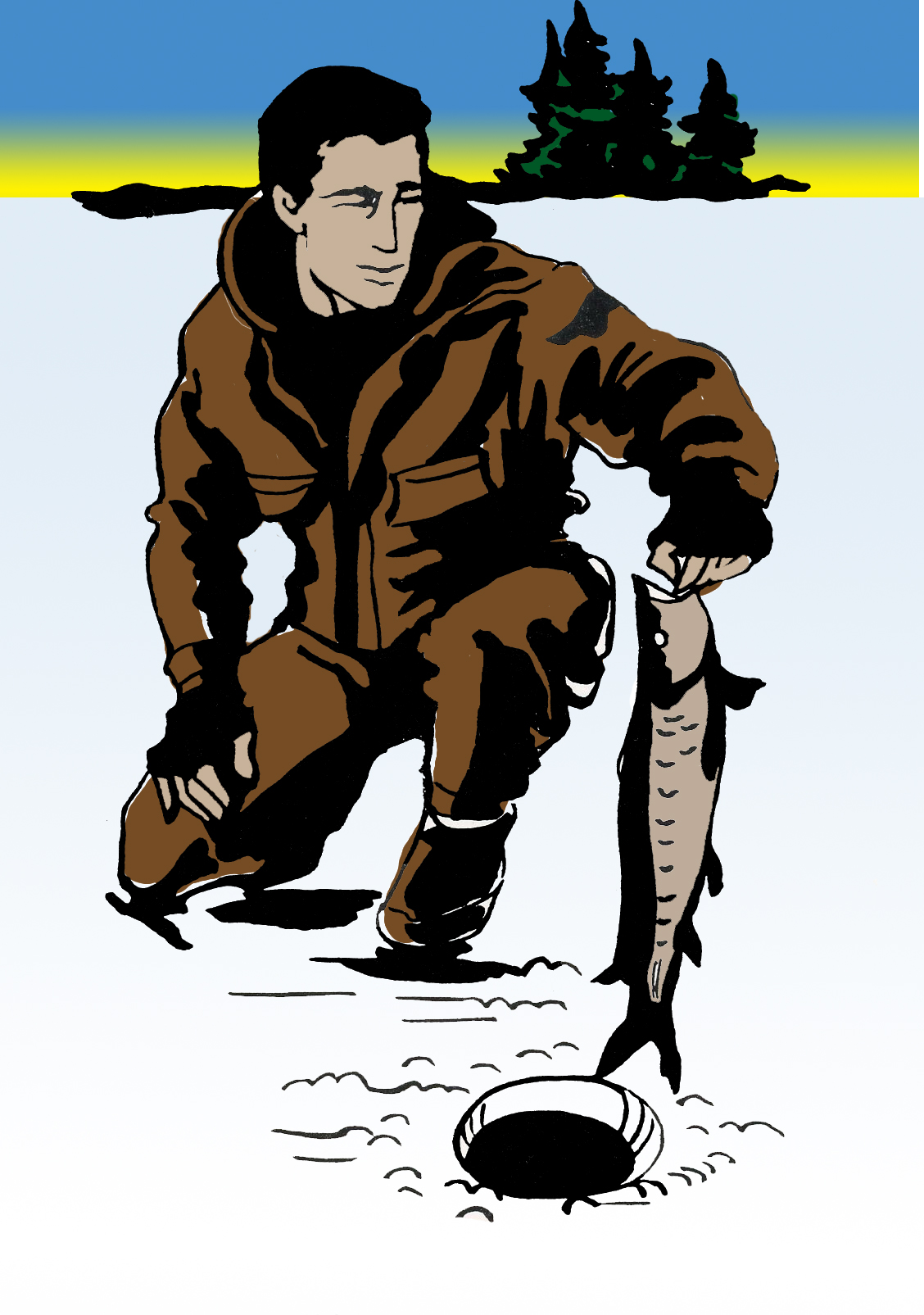
Ice fishing is traditional during winter months in the northern and eastern areas of the U.S. and in Canada. As serene and fulfilling as it is, however, the safety rules of ice fishing must be honored.
According to the Minnesota Department of Natural Resources, ice fishing safety is deeply rooted in accumulated wisdom and exchanged knowledge.
For instance, always check with the local bait shop about the thickness of the ice, new hazards, and presence of moving water. Ice that forms over moving water tends to be weaker, especially where currents are strong.
Ice fishing begins and ends with ice thickness. If it's 2 inches thick, don't go fishing. If it's 4 inches, you can fish on foot. At 5, an ATV is permissible. From 8 to 12, you can drive a car. From 12 to 15 inches thick, you can use a truck.
While being alone with your rod and bait enhances the allure of fishing outdoors, don't take to the ice without a partner.
Ice near the shore sometimes can be weaker than ice in the middle of the lake. Sometimes the exact opposite is true. Never assume that any area of the lake is the same as another.
Another heads-up: Beware of ice with unusual amounts of snow on it. The combined weight of accumulated snow increases pressure on the ice and also insulates and warms it.
Always be alert. The first indication of treacherous ice is the sound of cracking. While some cracking noises within reasonable proximity can be ignored, nearby cracking is a signal to move elsewhere immediately.
Finally, always bring ice-fishing spikes. These spikes are two sharp objects connected by a piece of rope that you wear around your neck. Should you happen to fall through a hole in the ice, they can enable you to chop your way out of a hole as would a rock climber. Spikes must always be a priority when packing your gear.

Rick Good spent ten years in the newspaper business, including with The News & Observer (Raleigh, NC) and The Greenville News (Greenville, SC). He co-wrote, with Melinda Coleman, Rutledge to Riley: Governors of South Carolina, 1776–Present (Published by The Greenville News), and is the author of Mind Games Trivia #1 (Amazon). He has recently spent 15 years creating original trivia content through Sounds Good Mobile Entertainment and continues that with his new company, SGME Software. He edits The Smart Reader’s money, real estate, and business coverage.