
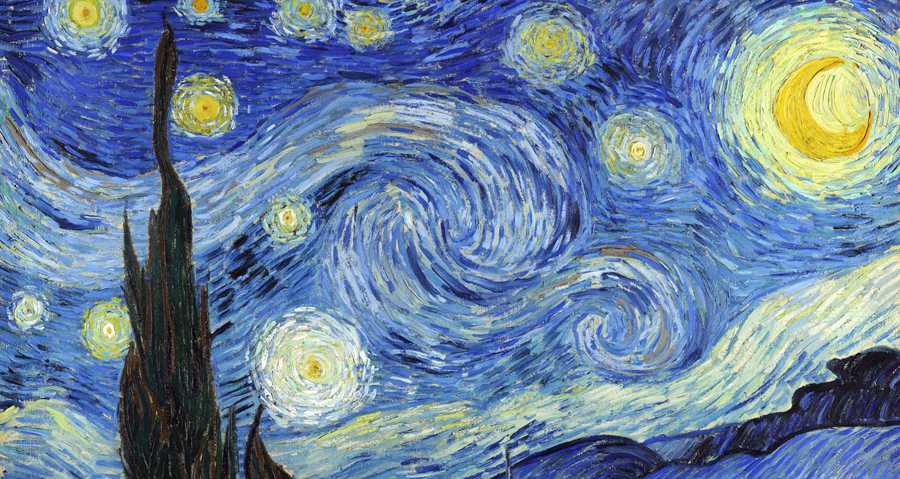
One of the most famous artistic views of the night sky, Vincent van Gogh's Starry Night, seems fanciful in its elaborate swirls and waves of the sky, but one art history professor discovered that the painting is far from imaginary.
In 1985, Albert Boime discovered that the painter, who was living in a mental institution after having famously cut off his ear, wasn't imagining the position of the stars and moon that night. He was painting what he saw.
Boime calculated that Van Gogh's work is a fairly accurate depiction of the eastern sky on June 19, 1889 at 4 a.m. Van Gogh painted Venus and the constellations Capella, Cassiopeia, and Pegasus — all in the correct location. What he didn't do is paint the moon as it would have appeared, a waning gibbous or a three quarter moon. Instead, he painted a crescent.

Briefs and quick reads selected and edited by The Smart Reader’s editorial team.