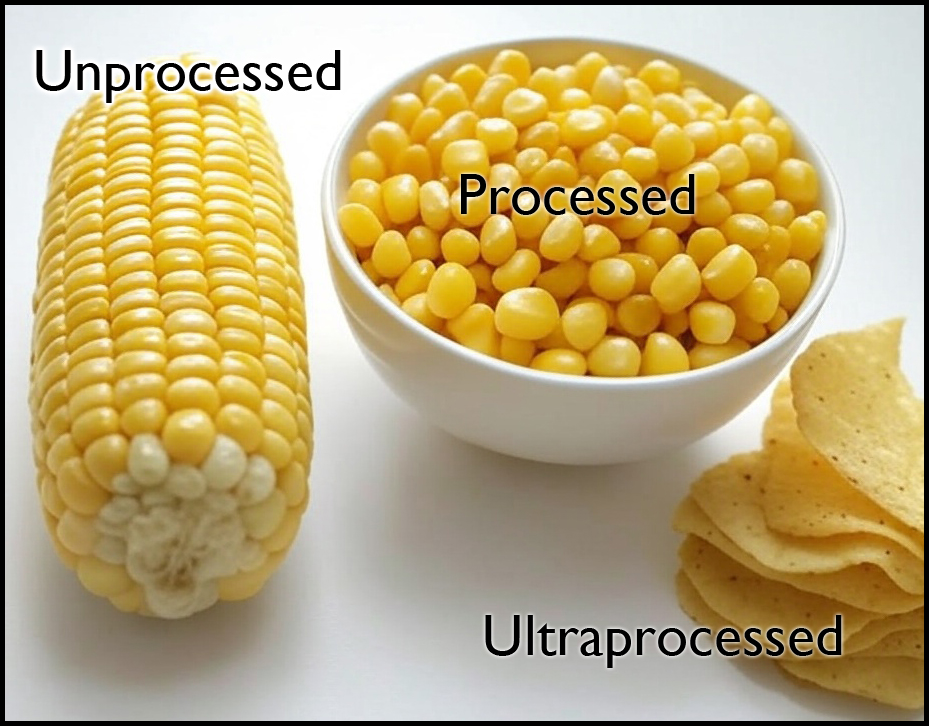
Corn is a good example of how foods are processed. It's a versatile staple that can be prepared in vastly different ways depending on the level of processing. Here's how it breaks down:
Unprocessed Corn
Fresh corn on the cob or dried whole corn kernels (e.g., from a farmer's market or harvested directly). Straight from the plant, with no additives or industrial treatment. You'd husk it, boil it, or grill it yourself.
Processed Corn
Canned corn, frozen corn, or cornmeal. The corn is harvested, then minimally altered for preservation or convenience. It might be cooked, cut, or ground, but it retains most of its natural properties without heavy additives. Ingredients: Corn, sometimes water and salt (for canned versions) or nothing extra.
Ultraprocessed Corn
Corn chips, corn-based snack puffs, or sugary corn cereals. The corn is heavily transformed'often broken down, mixed with additives, and reformed into a new product. These are ready-to-eat, shelf-stable, and loaded with extra flavors, fats, or sugars. Ingredients include corn (often as corn flour or syrup), plus salt, sugar, oils, artificial flavors, preservatives, and stabilizers. Some examples: Tortilla chips (corn, vegetable oil, salt, artificial flavors, MSG); Corn puffs (cornmeal, oil, cheese flavoring, artificial colors); Sweetened corn cereal (milled corn, sugar, corn syrup, artificial flavors).

Rick Good spent ten years in the newspaper business, including with The News & Observer (Raleigh, NC) and The Greenville News (Greenville, SC). He co-wrote, with Melinda Coleman, Rutledge to Riley: Governors of South Carolina, 1776–Present (Published by The Greenville News), and is the author of Mind Games Trivia #1 (Amazon). He has recently spent 15 years creating original trivia content through Sounds Good Mobile Entertainment and continues that with his new company, SGME Software. He edits The Smart Reader’s money, real estate, and business coverage.