
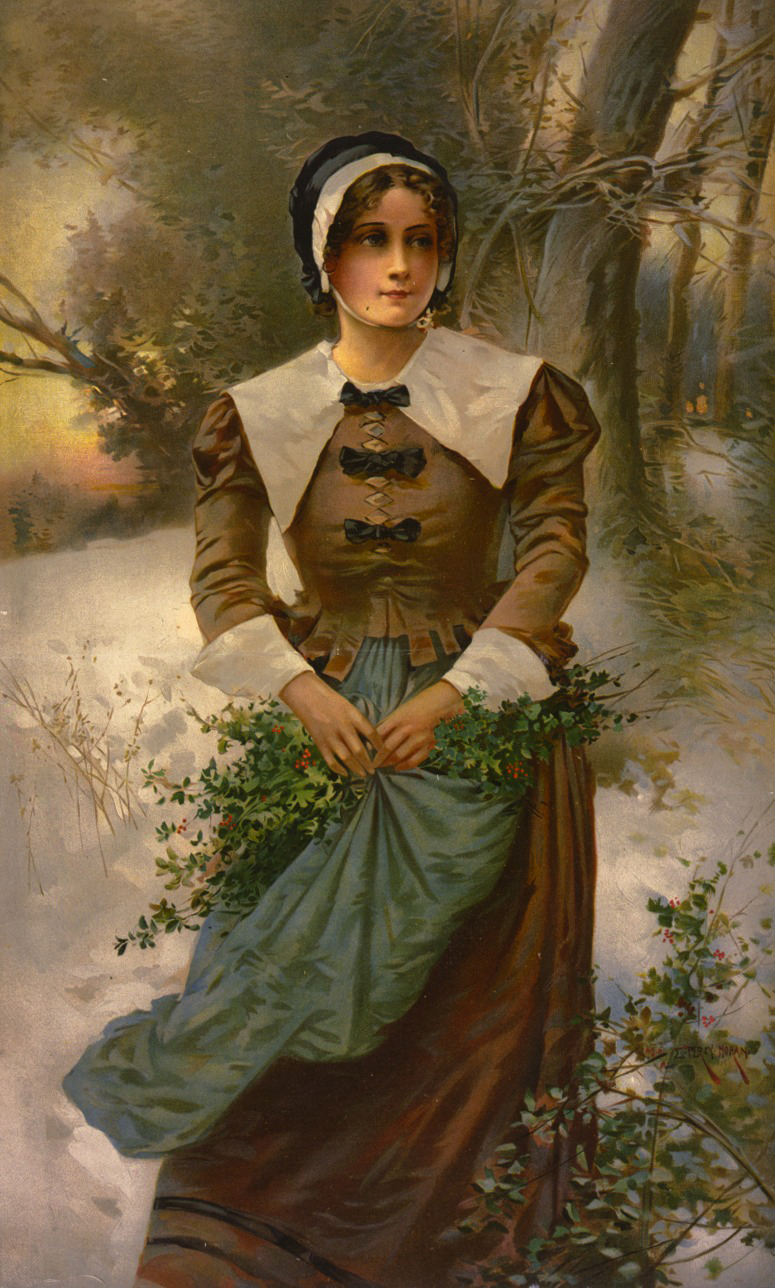
Who were the Puritans, really?
The Puritans are remembered for many things, the first Thanksgiving among them. But more than four centuries later, Puritans have acquired a reputation for being so rigid that their very name is an insult: puritanical.
They are thought to have been dour, prudish, intolerant, and incredibly paranoid about witchcraft. But is any of it true?
No, it's not exactly true, according to the Christian History Institute.
The Puritans were deeply religious. As English Protestants, they objected to what they saw as continuing Catholic influences in the Church of England after the death of Queen Elizabeth I. Some, like the Pilgrims who sailed on the Mayflower, broke with the Church of England entirely, sailing into the wilderness to start their lives from nothing.
What they did have was a vision. They thought their struggles and suffering was part of doing the most important work in the world to establish what Boston clergyman Cotton Mather called "the Lord's Kingdom."
There wasn't much room for other religious traditions. They didn't put up with the celebration of Christmas, they loathed the Quakers, and saw idolatry everywhere.
Still, the Puritans weren't the stern and unsmiling black-garbed caricatures that Americans still joke about. They did wear colored clothing, although black and undyed fabrics were more practical. They even painted their homes in eye-catching shades. They cracked jokes, wrote beautiful poetry, and likely consumed more alcohol than we do today.
We have H.L. Mencken, among others, to thank for the myth of the joyless Puritan., Whom do we blame for this Victorian America we live in?, he groused in the early days of Prohibition. And somehow, Puritans caught the rap.

Rick Good spent ten years in the newspaper business, including with The News & Observer (Raleigh, NC) and The Greenville News (Greenville, SC). He co-wrote, with Melinda Coleman, Rutledge to Riley: Governors of South Carolina, 1776–Present (Published by The Greenville News), and is the author of Mind Games Trivia #1 (Amazon). He has recently spent 15 years creating original trivia content through Sounds Good Mobile Entertainment and continues that with his new company, SGME Software. He edits The Smart Reader’s money, real estate, and business coverage.