
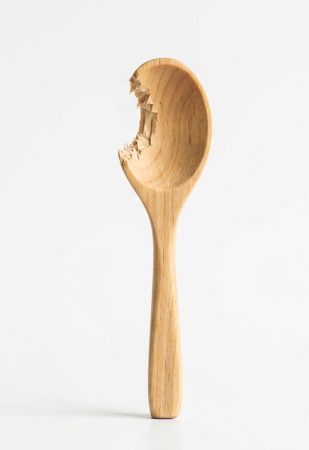
Imagine finishing your morning cereal – and eating the spoon. That is not a joke, it is where food utensils and packaging are headed, and faster than most people realize.
Scientists and startups have spent years developing packaging made from seaweed, rice starch, cassava, and other natural materials that dissolve in water, break down safely in the earth, or can simply be eaten. London-based company Notpla makes sachets from seaweed extract that hold liquid and dissolve harmlessly when you’re done. Their pouches have already been used at the London Marathon as a plastic-free alternative to water cups. Runners bite, sip, and the packaging disappears.
Other companies are producing edible cutlery flavored like vanilla. cocoa, black pepper and chile, depending on the use of the spoon. Those are available for purchase from companies like Incredible Eats. Dissolvable coffee pods, and plant-based films that wrap everything from cheese to fresh produce are available now. Xampla, a spinout from Cambridge University, makes flexible packaging from plant proteins that behaves like plastic but composts in weeks.
The market for edible and dissolvable packaging is projected to reach $1.4 billion by 2030. Some manufacturers are taking it further, embedding microscopic sensors in the packaging material itself to monitor freshness and temperature in real time, smart packaging you can eat.
None of this requires you to actually eat your spoon. But the fact that you could is a reasonable measure of how far materials science has come.

Rick Good spent ten years in the newspaper business, including with The News & Observer (Raleigh, NC) and The Greenville News (Greenville, SC). He co-wrote, with Melinda Coleman, Rutledge to Riley: Governors of South Carolina, 1776–Present (Published by The Greenville News), and is the author of Mind Games Trivia #1 (Amazon). He has recently spent 15 years creating original trivia content through Sounds Good Mobile Entertainment and continues that with his new company, SGME Software. He edits The Smart Reader’s money, real estate, and business coverage.