
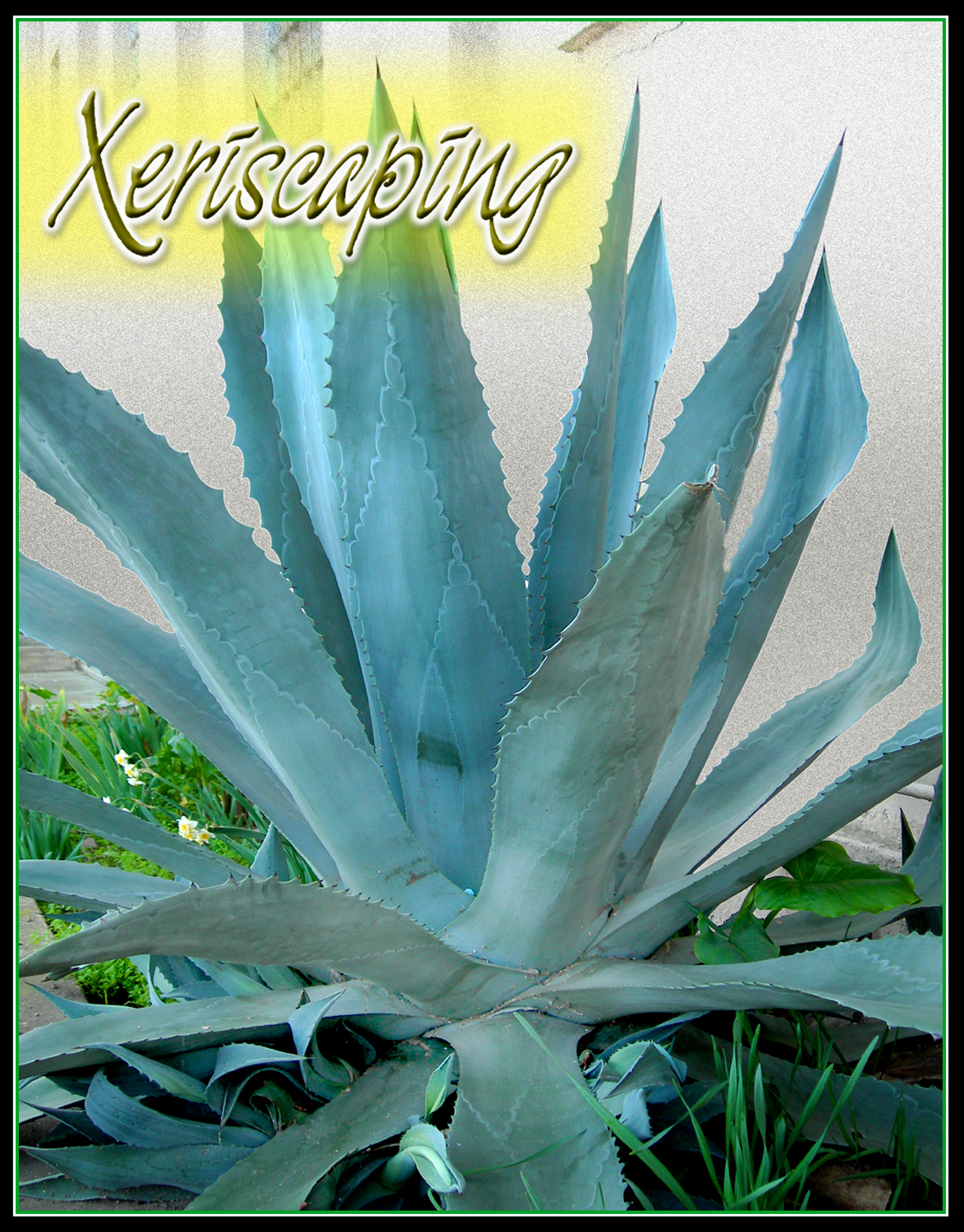
Xeriscaping is a practice of landscaping with drought-tolerant plants, which conserve water and save maintenance time. The name comes from the Greek word zeros, which means dry.
Using this theme, you place plants that need more water closest to the house. Those that need little or no irrigation can be planted farther away or at the lot's farthest points.
Xeriscaping makes use of many plants you may already have, such as hen & chickens, yucca, sedum, Coronation Gold or Moonshine yarrow, sagebrush and lavender, all of which are perennials.
Winter-hardy succulents that thrive in USDA Hardiness Zone 5 and 6 (middle America) include agaves. Agaves, with their fleshy, wide leaves, are an attractive choice.
Harvard's Century Plant is one example. It can make an architectural statement in a garden. It can reach 36 inches high at maturity and makes a dramatic statement with low-growing flowering plants in front of it.
Container plantings and annuals need more water and should be planted closest to the house and the water source.
To xeriscape more of your property, consider increasing the size of a patio, creating a stone walkway, or turning one or more sections of your lawn into an area for attractive, drought-resistant bushes and plants.

Rick Good spent ten years in the newspaper business, including with The News & Observer (Raleigh, NC) and The Greenville News (Greenville, SC). He co-wrote, with Melinda Coleman, Rutledge to Riley: Governors of South Carolina, 1776–Present (Published by The Greenville News), and is the author of Mind Games Trivia #1 (Amazon). He has recently spent 15 years creating original trivia content through Sounds Good Mobile Entertainment and continues that with his new company, SGME Software. He edits The Smart Reader’s money, real estate, and business coverage.