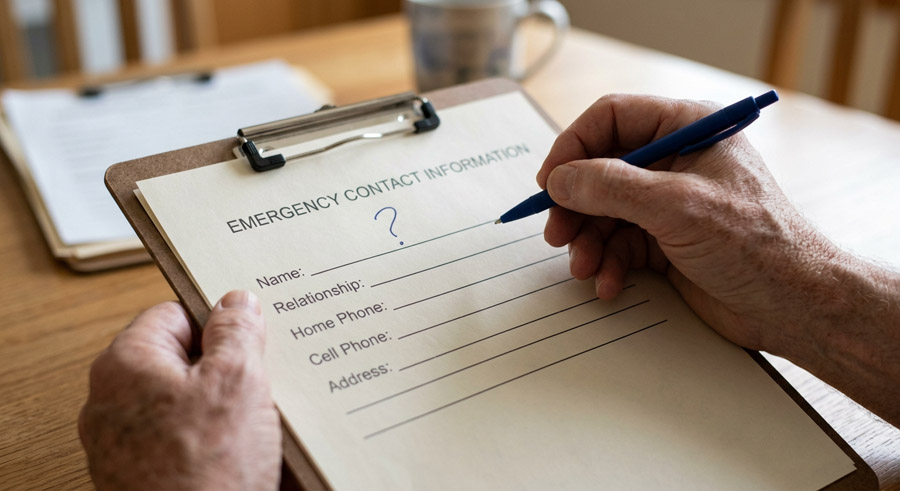
Every doctor's office asks it. Every hospital intake form includes it. Who is your emergency contact? For many older adults, that line sits blank for a long moment. The honest answer is complicated.
Spouses pass, so do siblings and friends. Birth families dwindle. Children, if there are any, may live across the country. And a growing number of Americans chose not to have children at all, a decision that can look quite different at 30 than it does at 75, when the people who were supposed to form your "chosen family" are themselves aging or gone.
This is a real and common situation, and it deserves a practical answer.
First, the good news: your emergency contact does not have to be a blood relative, and they do not have to live nearby. What a hospital or doctor actually needs from that person is straightforward, your medical history, current medications, any known allergies, and some understanding of your wishes. They need someone to call and someone who knows you. A trusted friend two states away who knows your health situation is more useful than a neighbor who has never been inside your house.
If you are building your emergency contact from scratch, give it some thought. Who actually knows your life? Who would you trust to speak for you? That person, friend, former colleague, fellow congregant, is your answer. Ask them directly and have the conversation about your medical history and your wishes. Then take it a step further: get a healthcare proxy document drawn up so that person has legal standing to make decisions if needed. An emergency contact is a phone number. A healthcare proxy is real protection. A good attorney can prepare these documents simply and inexpensively. It is one of the most considerate things you can do, for yourself, and for whoever loves you enough to say yes.
Allyson Good curates senior living, health, and family content. She is formerly the Managing Editor of Active Life, a print newspaper published in 2016-2017 for seniors, choosing practical articles on health, money, safety, and everyday living for older readers. She is also an avid gardener and offers up Garden Hints and Tips on a regular basis.