
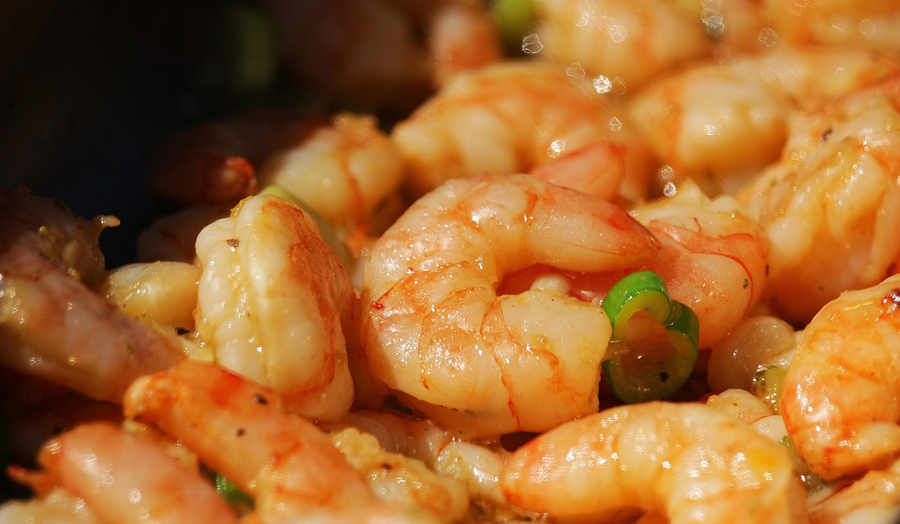
If you've purchased Gulf shrimp lately, there's a real chance that you aren't really getting it.
Instead, your shrimp might have been raised on overseas farms, imported to the U.S., and mislabeled as Gulf shrimp'a practice that violates consumer protection laws and undermines the livelihood of Gulf shrimpers.
According to a Washington Times report, the food safety company SeaD Consulting tested shrimp from restaurants across Gulf Coast states, including St Petersburg, Baton Rouge, Biloxi, Galveston, and the Tampa metro area, finding that 43 to 96 percent were committing, shrimp fraud.,
A significant amount of the imported shrimp comes from India, where shrimp industry processing plants can fall short of U.S. food safety standards. According to the Associated Press, shrimp peelers in India often work in unsanitary conditions, earning low wages'sometimes as little as $2, $5 per day'and lack essential protective gear, increasing the risk of contamination from direct contact with hands and hair.
Authentic Gulf shrimp may be more expensive, but it might be worth it. According to ZipRecruiter, a shrimp boat deckhand makes an average of $17.50 per hour. Large processors use machines for peeling.
The U.S. tariff policy, implemented in April 2025, aims to protect the Gulf shrimp industry, a move strongly supported by the industry. Initially, shrimp imports faced a 10 percent tariff, with additional duties of 10'46 percent on countries like India (26 percent) and Vietnam (46), though these were paused on April 11, 2025, and reduced to 10 percent for 90 days (excluding China). Countries like India, Ecuador, Indonesia, and Vietnam benefit from government subsidies, lower production costs, and lax regulations, often using banned antibiotics and forced labor. These countries impose high tariffs (13'45 percent) on U.S. shrimp exports, while the U.S. had minimal tariffs on shrimp imports for much of its history.

Rick Good spent ten years in the newspaper business, including with The News & Observer (Raleigh, NC) and The Greenville News (Greenville, SC). He co-wrote, with Melinda Coleman, Rutledge to Riley: Governors of South Carolina, 1776–Present (Published by The Greenville News), and is the author of Mind Games Trivia #1 (Amazon). He has recently spent 15 years creating original trivia content through Sounds Good Mobile Entertainment and continues that with his new company, SGME Software. He edits The Smart Reader’s money, real estate, and business coverage.