
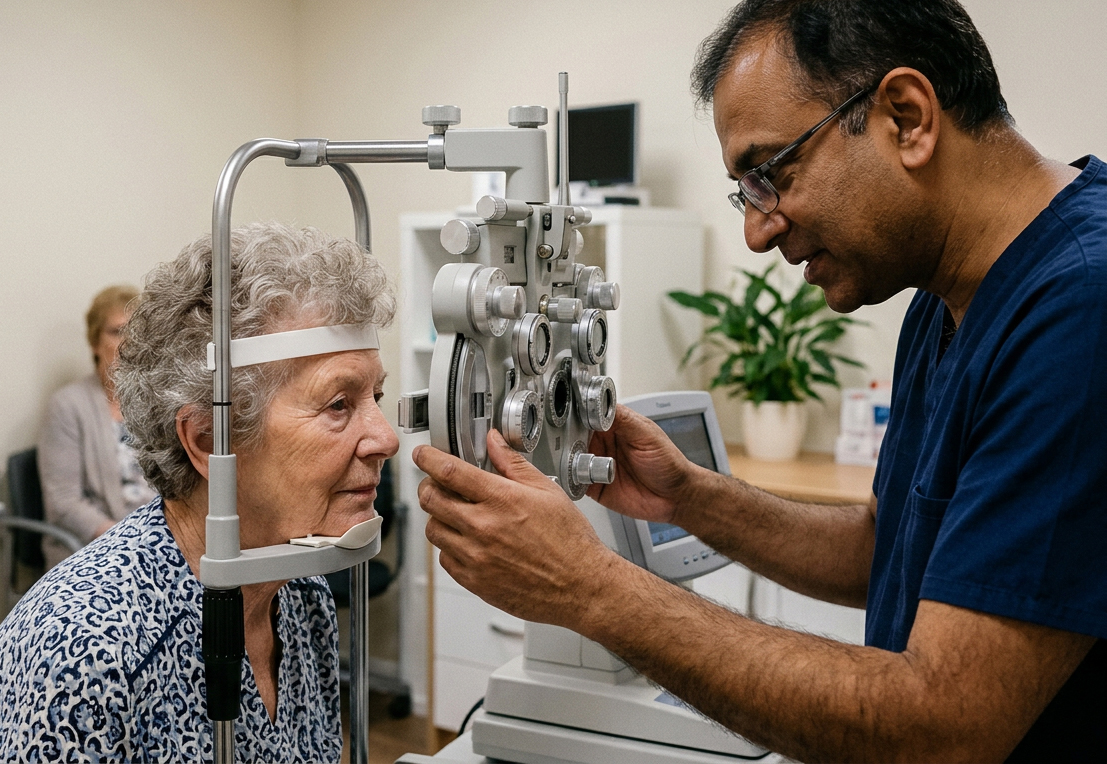
June is Cataract Awareness Month, which makes it a good time to know where things stand, and the news is largely encouraging.
Cataracts, the clouding of the eye's natural lens, affect more than 20 million Americans over the age of 40, and that number is expected to surpass 30 million by 2028. Most people develop them gradually, with symptoms becoming significant after age 60. The most common signs are blurry or foggy vision, difficulty driving at night, and colors that seem faded or yellowed.
The treatment, cataract surgery, has become one of the safest and most effective procedures in medicine. Success rates consistently exceed 97 percent, most patients notice improved vision within 24 to 48 hours, and severe complications occur in fewer than one percent of cases. Newer lens options, including light-adjustable lenses that can be fine-tuned after surgery and extended depth-of-focus lenses that reduce the need for reading glasses, are giving patients great outcomes. What does not yet exist, despite some promising headlines, is an eye drop that dissolves cataracts. Research on compounds like lanosterol has shown results in animal models but has not translated to humans. Surgery remains the only proven treatment.
Prevention still matters. UV-blocking sunglasses, a diet rich in vitamins C and E and leafy greens, not smoking, and limiting alcohol all reduce cataract risk. Regular eye exams, every two to four years after 40, every one to two years after 65, catch them early, when treatment is most straightforward.

Rick Good spent ten years in the newspaper business, including with The News & Observer (Raleigh, NC) and The Greenville News (Greenville, SC). He co-wrote, with Melinda Coleman, Rutledge to Riley: Governors of South Carolina, 1776–Present (Published by The Greenville News), and is the author of Mind Games Trivia #1 (Amazon). He has recently spent 15 years creating original trivia content through Sounds Good Mobile Entertainment and continues that with his new company, SGME Software. He edits The Smart Reader’s money, real estate, and business coverage.