
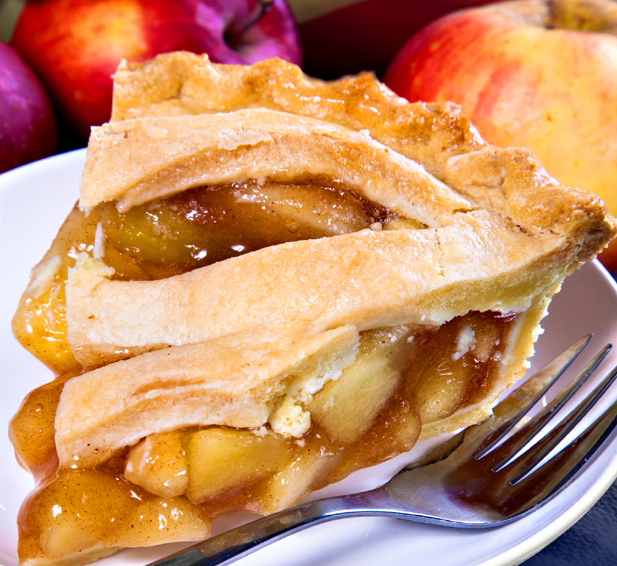
Pie crust — it's simple in theory, but even seasoned cooks sometimes shy away from this Thanksgiving essential and rely instead on frozen pie shells or pre-rolled boxed crusts.
There's nothing wrong with saving time and energy with a ready-made crust, but a buttery crust from scratch is easier and faster than you might think.
* First, choose the right recipe. Most pie crust recipes are similar, but a classic butter crust should contain only flour, butter, a little salt, some sugar and water or a water mixture to bind it all together. A single crust recipe will make enough dough for one pie shell, while a double crust will make two pie shells or a shell with a top. Pie crust keeps in the refrigerator for three or four days and freezes well.
* Don't skimp on good ingredients. High-quality unsalted butter, such as European-style, is easier to work with and provides great flavor. For flour, fresh all-purpose flour works well. Gold Medal flour is beloved by pie makers for its wide availability and ideal protein content. You can also try a lower-protein pastry flour. Avoid bread flours, which are higher in protein and will make tougher crusts.
* Make sure all your ingredients are very cold. Cube and chill butter. Refrigerate the water or drop in a couple of ice cubes. You can even freeze your flour first.
* If you're blending the butter into the flour by hand, run your hands under cold water first to cool them down. Make sure that any tools, such as pastry cutters or knives, aren't warm from the dishwasher or storage near a hot stove. A chilled ceramic work bowl is also helpful. If you're using a food processor or a stand mixer to blend your fat and flour, make sure the pieces are cool.
* Butter should be broken down until your mixture resembles roughly-ground cornmeal, but a few slightly larger chunks help create flaky layers and bursts of butter flavor.
* After you add the liquid, be careful not to overwork your mixture. Too much handling or stirring develops gluten, which leads to a tough pie crust. Try using a silicone spatula to gently fold and press the mixture until it just barely holds together.
* Always chill your dough in the refrigerator after assembly — at least two hours, but overnight is best. This gives gluten time to relax and allows your liquid to fully hydrate your flour, forming a solid dough that you can roll out.

Rick Good spent ten years in the newspaper business, including with The News & Observer (Raleigh, NC) and The Greenville News (Greenville, SC). He co-wrote, with Melinda Coleman, Rutledge to Riley: Governors of South Carolina, 1776–Present (Published by The Greenville News), and is the author of Mind Games Trivia #1 (Amazon). He has recently spent 15 years creating original trivia content through Sounds Good Mobile Entertainment and continues that with his new company, SGME Software. He edits The Smart Reader’s money, real estate, and business coverage.