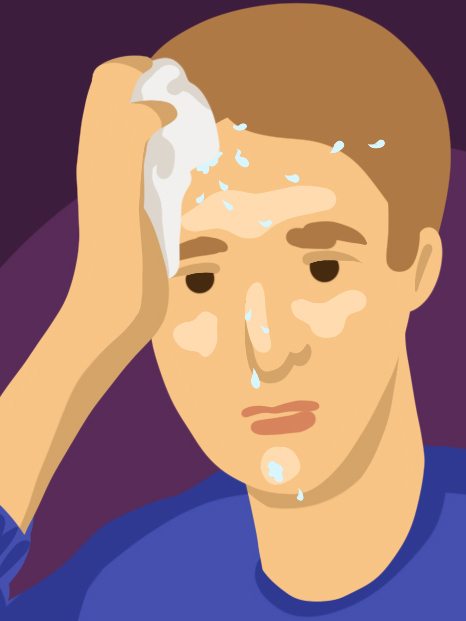
Humans have always smelled a little funky, and we've always been self-conscious about it. For thousands of years — long before modern indoor showers and deodorant aisles at the drugstore — humans have battled their own body odor. But the fight against sweat itself is barely more than a hundred years old, and it started with a heat wave in New Jersey.
Sweat is virtually scent-free on its own. According to The Week, the real stink comes from our body's natural bacteria, which eats certain compounds in our sweat and in turn, secretes that distinctive odor that we all know and loathe. But our ancestors, even the recent ones, didn't know that, and attacked the problem they only way they knew how — they bathed when they could (often infrequently) and used plenty of perfume.
Odorono, a liquid mixture of aluminum chloride and water, wasn't the first true antiperspirant on the market when Edna Murphey started selling it in 1910. Others had tried and mostly flopped, thanks to lingering Victorian sensibilities and the belief that blocking sweat was unhealthy. By the summer of 1912, Murphey was a flop, too, with no sales from her booth at an Atlantic City exposition. But when the temperature rose and attendees started sweating through their clothes, bottles started flying off the shelves.
Murphey took her unexpected windfall to a New York advertising agency, where a Bible salesman turned copywriter named James Young came up with the idea to market "excessive perspiration" to women as an embarrassing medical ailment. He took it a step further in 1919, with ads that warned women that unaddressed body odor would make them the subject of gossip and diminish their marriage prospects. Many readers found the ads insulting, but sales surged. Men adopted antiperspirant as well after Depression-era ads tied anti-sweat products to employability.
Today, the anti-perspirant and deodorant market is worth around $18 billion. But if the summer of 1912 had been a little cooler for Atlantic City, it might not exist at all.

Rick Good spent ten years in the newspaper business, including with The News & Observer (Raleigh, NC) and The Greenville News (Greenville, SC). He co-wrote, with Melinda Coleman, Rutledge to Riley: Governors of South Carolina, 1776–Present (Published by The Greenville News), and is the author of Mind Games Trivia #1 (Amazon). He has recently spent 15 years creating original trivia content through Sounds Good Mobile Entertainment and continues that with his new company, SGME Software. He edits The Smart Reader’s money, real estate, and business coverage.