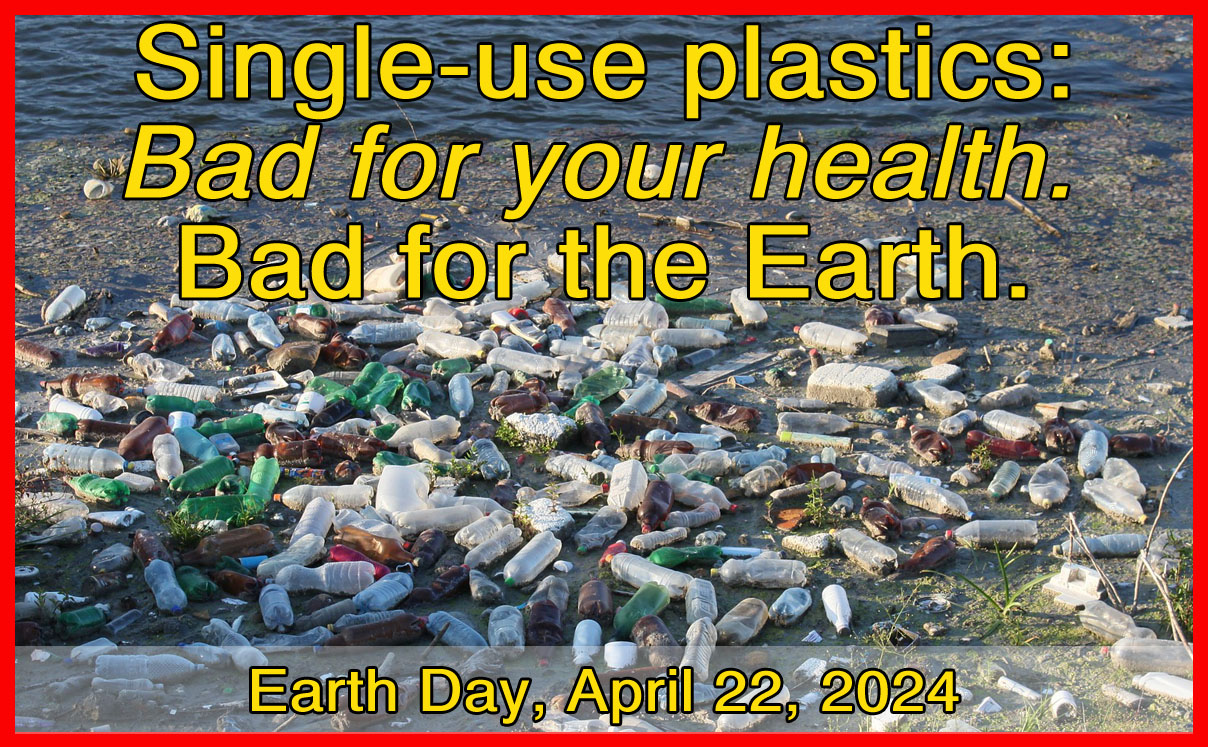
Earth Day 2024: Planet v. Plastic
The ocean garbage patch is stuffed with plastic — but also life
The Great Pacific Garbage Patch is a floating mass of 1.8 trillion pieces of plastic debris in an area twice the size of Texas. It's called a gyre — a place where currents meet in the ocean. This particular gyre gathers up garbage like plastics and swirls them around in a great clumpy mass.
But the same currents that nab the trash also gather up tiny ocean life to create a strange ecosystem that has probably existed for thousands, or even millions of years, according to oceanographers quoted in National Geographic.
It turns out that the gyre contains an abundance of slugs, jellyfish, snails, and tiny floating marine animals, all living amid a vast territory of plastic waste.
Scientists have just begun asking what these largely invisible small life forms do for the ecosystem, but they do live amid the plastic, and it is possible that simply dragging up plastic waste from the gyre could destroy the abundance of life there too. That could negatively impact ocean life.
The key seems to be stopping the plastic from entering the ocean in the first place.
Researchers, governments, and ocean conservation groups differ on the best way to mitigate the plastic waste problem, but individuals can take steps to reduce their own ocean-bound plastic waste:
* Buy in bulk to reduce plastic packaging waste
* Carry a reusable water bottle
* Say no to disposable plastic cutlery and other single-use plastic products
* Choose products made from recycled plastics
* Help out with river and beach clean-ups (and pick up trash when you can)

Briefs and quick reads selected and edited by The Smart Reader’s editorial team.