Some Twitter users have been humbled, and a scientist has apologized, after a simple joke unintentionally revealed just how credulous people can be.
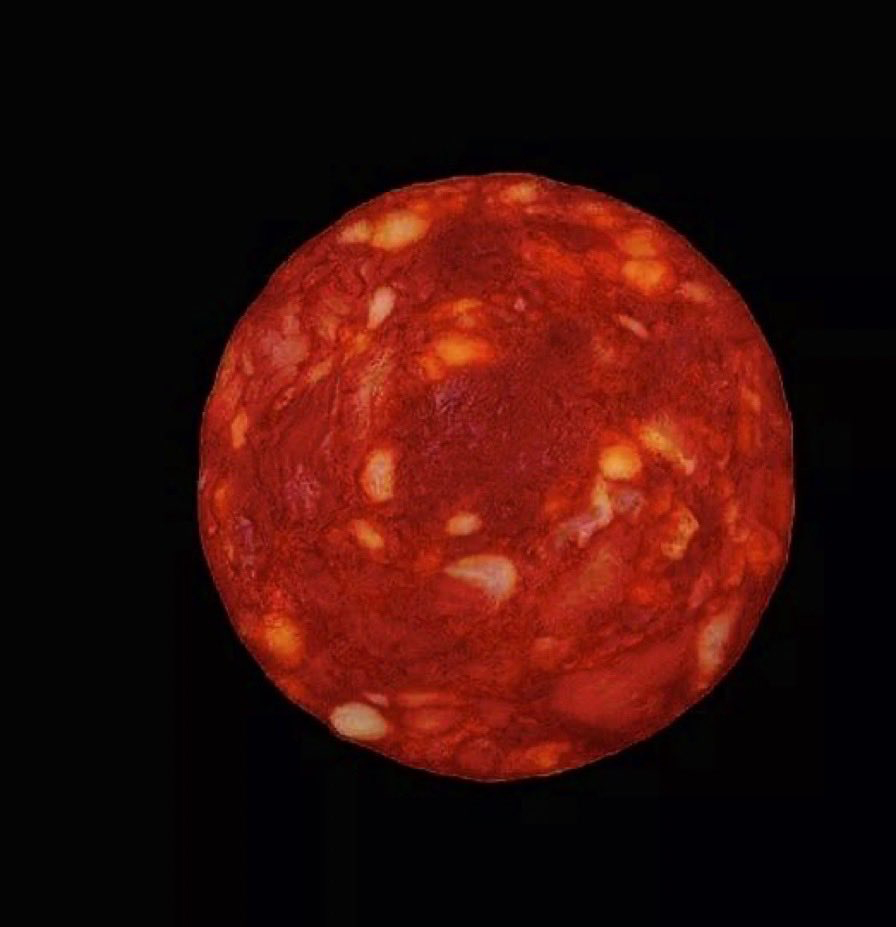
French physicist Etienne Klein recently trolled the Internet by posting up a supposed image of a distant star. Except it was no star at all — just an ordinary slice of chorizo sausage.
Admittedly, the chorizo did share a somewhat uncanny resemblance with photos of our sun. Problem is, we have no way of collecting high definition images of distant stars, not even with the recently launched and cutting-edge James Webb telescope.
Consider this: The James Webb telescope recently had its sights trained on Jupiter and the images stunned many scientists. The details offered were far more nuanced than expected, even rivaling that sliced chorizo. But Jupiter is a mere 380 million miles away — next door in cosmic terms — and it takes light from the sun about 45 minutes to reach the gas giant.
The closest star to our solar system, Proxima Centauri, is about four light years away. In a single year, light will travel 5.88 trillion miles. Yes, trillion with a T, meaning Proxima Centauri is about 23.5 trillion miles away. Our best telescopes can collect detailed images of objects hundreds of millions of miles away, but with our current technology, there's no way to get detailed imagines from objects many trillions of miles away. Keep in mind that in the cosmic sense, Proxima Centauri is practically our neighbor.
What does all of this mean? For one, we're just starting to explore space. And on top of that, a healthy dose of skepticism can go a long way. That includes questioning authority figures, as the chorizo incident so finely illustrates. The internet has made it easy to share information, but that doesn't mean that everything floating around is true, even if the information comes from an authoritative source.

Rick Good spent ten years in the newspaper business, including with The News & Observer (Raleigh, NC) and The Greenville News (Greenville, SC). He co-wrote, with Melinda Coleman, Rutledge to Riley: Governors of South Carolina, 1776–Present (Published by The Greenville News), and is the author of Mind Games Trivia #1 (Amazon). He has recently spent 15 years creating original trivia content through Sounds Good Mobile Entertainment and continues that with his new company, SGME Software. He edits The Smart Reader’s money, real estate, and business coverage.