One of the nation's last frontiers, Alaska has wilderness, vistas, big wild animals — and the last, greatest, most dramatic race on earth.
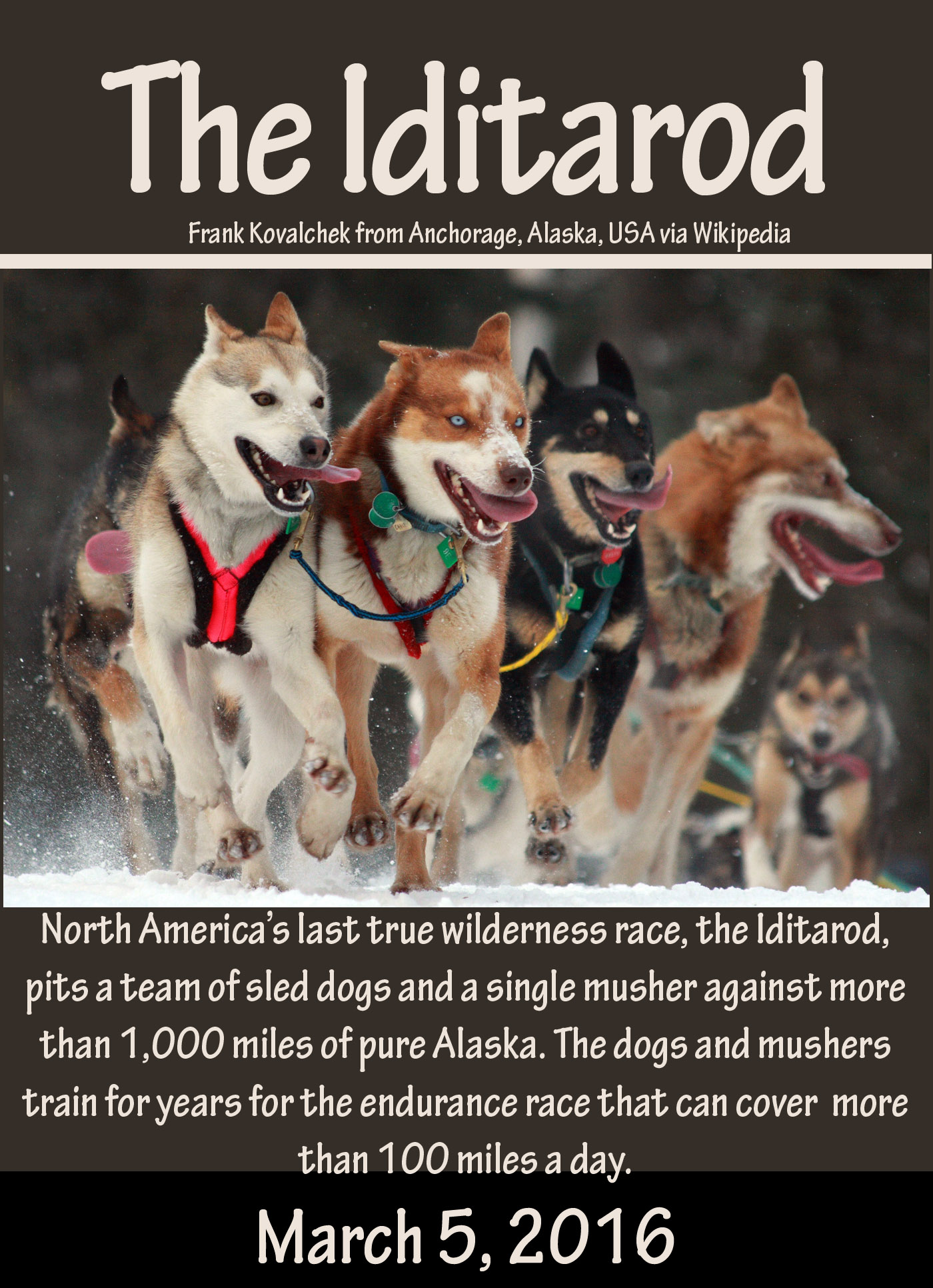
The Iditarod Trail Dog Sled Race starts in Anchorage on March 5, 2016, and concludes about 10 days and a thousand miles later in Nome.
The race is an exhausting trek through blizzards, extreme wilderness, wild-chill temps as low as 100 degrees below zero, fallen timber, and charging moose.
The object of the Iditarod race, Alaska's best-known sporting event, is for the 50 or more mushers and their teams of 16 dogs (at least six must be on towline at the finish) to cover the grueling 1,049 miles in the shortest amount of time. The mileage is officially rounded off to 49 to signify Alaska's number of statehood. In 2004, 77 mushers finished the race, the largest number on record.
The original Iditarod Trail was only nine miles and was used to deliver mail and food supplies by dog sled in the 1800s. The first long-distance race was run in 1973. Alaskans wanted to save the huskies and the sled dog culture.
Sled dog culture requires a lifetime of training for musher and dogs.
The dogs (and mushers) train for years as endurance athletes. As pups, the chosen dogs are the willful type that are rowdy on the leash. That suggests the dog will love to run and pull. By the time they are trained in commands, camping in the wilderness, and pulling a sled with the team, the dogs will be able to run 100 miles in a day without a significant break. During their trek, they will need 10,000 calories per day.

Rick Good spent ten years in the newspaper business, including with The News & Observer (Raleigh, NC) and The Greenville News (Greenville, SC). He co-wrote, with Melinda Coleman, Rutledge to Riley: Governors of South Carolina, 1776–Present (Published by The Greenville News), and is the author of Mind Games Trivia #1 (Amazon). He has recently spent 15 years creating original trivia content through Sounds Good Mobile Entertainment and continues that with his new company, SGME Software. He edits The Smart Reader’s money, real estate, and business coverage.