
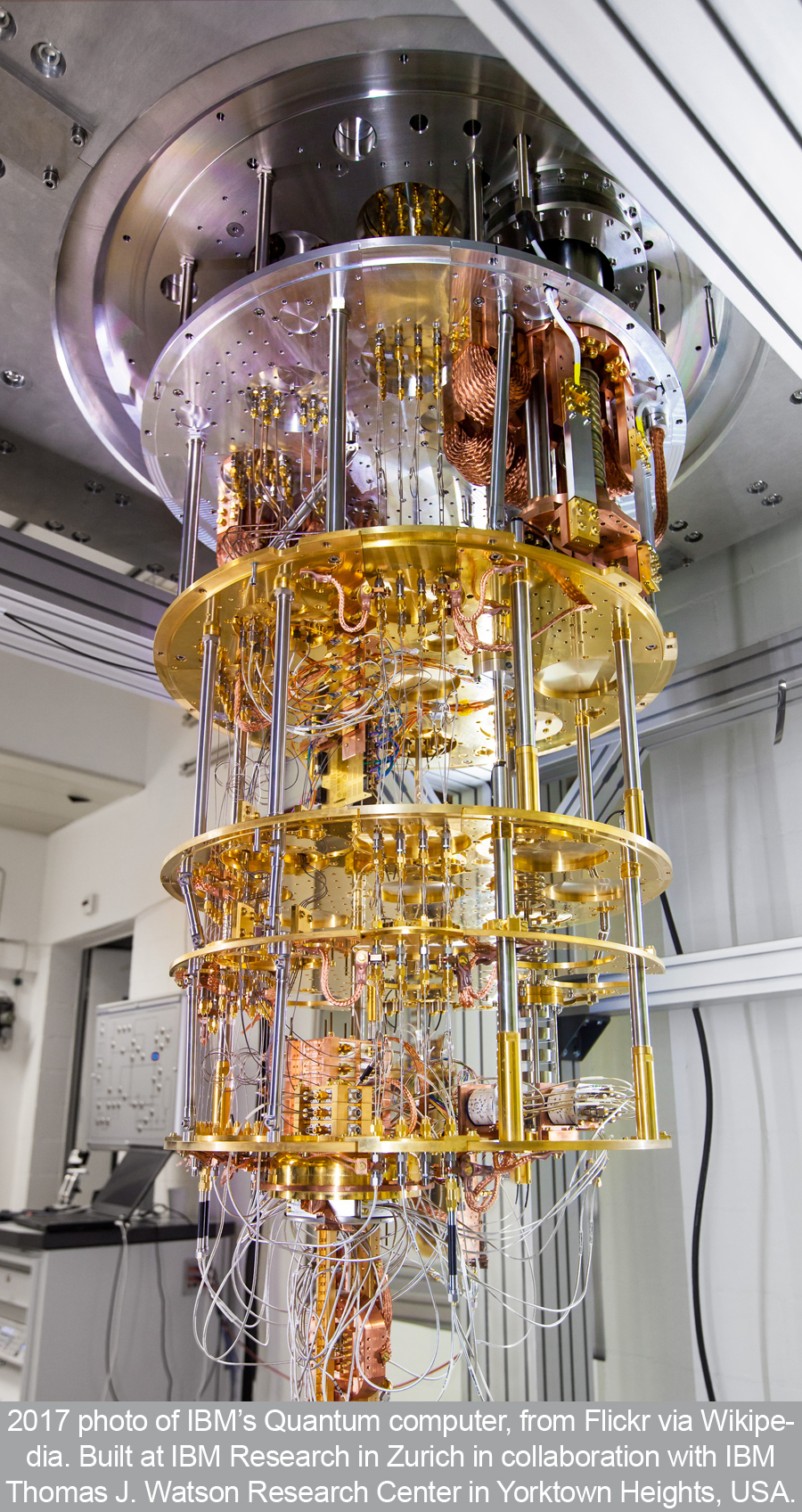
The future of quantum computer is here, at least some people say so
In high security research centers all over the world, a new computer is coming. Or maybe it's here. Maybe it isn't. Depends on who you ask.
Just when we understood megabytes, scientists are talking about qubits and quantum volume in super-fast quantum computers.
In 2019, Google celebrated its Sycamore computer that works on 53 qubits. That seemed like a lot of qubits because, at the time, IBM only had a 28 qubit quantum computer. Maybe that's why Google declared that it had achieved "quantum supremacy."
But, wait just one nanosecond, pal. Hold my beer.
IBM called the supremacy claim "indefensible" and sniffed that Google's Sycamore was built to solve just one specific equation, according to engadget.com.
The key to a quantum computer, it seems, is not just qubits but quantum volume. Quantum volume includes qubits, but it also measures connectivity, errors, physical hardware, coherence, and compiler efficiency.
And whose quantum computer has a bunch of that?
Honeywell.
Seems IBM has a very cool quantum computer with a volume of 32. But Honeywell announced in February it had a quantum computer with a volume of at least 64. That's twice as much as anyone else's volume. And just to show who believes it, IBM is in and Microsoft gave Honeywell its seal of approval. In fact, clients of Microsoft's cloud computer service, Azure, will be getting to use Honeywell's big Quantum.
That means that giant companies who have impossible problems that need to be solved quickly will be able to do that with quantum computing, according to Honeywell. Honeywell gives some examples including such things as the best way to arrange molecules and atoms to protect equipment from corrosion.
But do the Honeywell, IBM, or Google quantum computers really work in practical applications? It wasn't long ago that science publications were puzzling about how to keep a qubit from disappearing. Honeywell says the time is now and quantum computing will be the ultimate disrupter.

Briefs and quick reads selected and edited by The Smart Reader’s editorial team.