
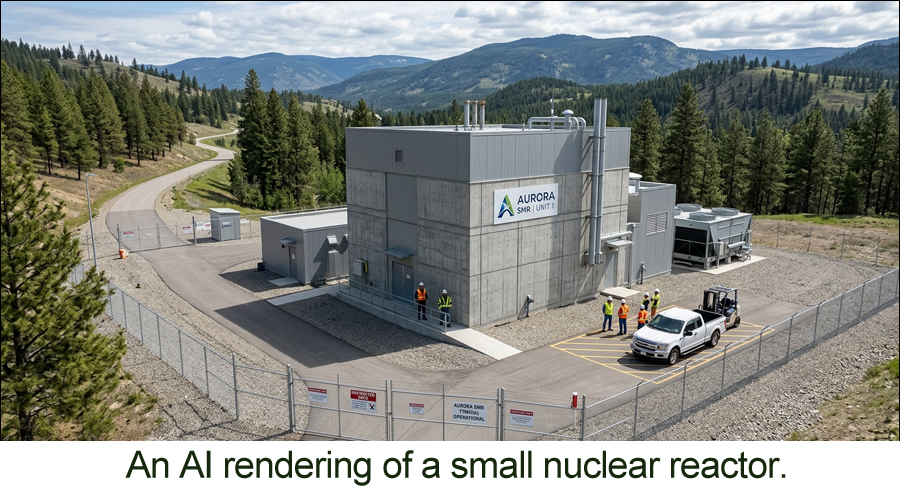
For 30 years, nuclear energy in America has been mostly a story of decline, aging plants, high costs, and public anxiety. The next chapter looks very different.
A new generation of nuclear reactors is under development, and they are nothing like the towering structures most people picture. Small modular reactors, or SMRs, are compact enough that some components can be factory-built and shipped by truck. They are designed with passive cooling systems that shut down safely without human intervention or external power. And they produce carbon-free electricity around the clock, regardless of weather, something wind and solar cannot guarantee.
In March 2026, TerraPower, the nuclear company backed by Bill Gates, received federal construction approval for its Natrium reactor in Kemmerer, Wyoming. It is expected to begin generating power in 2031, making it the first new nuclear plant to come online in the United States in decades. Amazon has committed $334 million to a separate project in Washington state. Google, Microsoft, and Meta have all signed nuclear power deals as well, driven largely by the enormous electricity demands of their AI data centers, which need reliable 24/7 power that renewables alone cannot provide.
The first US small modular reactor online by 2031 would have seemed like fantasy a decade ago. It no longer does.

Briefs and quick reads selected and edited by The Smart Reader’s editorial team.