
Trade secrets have one big drawback as a way to protect a product: when the secret-keeper dies, the product can die with them.
Damascus steel is a famous case. Between roughly 300 and 1700 AD, smiths in the Middle East forged blades with a distinctive watered pattern, an edge that stayed sharp through hard use, and a flexibility that should not have been possible for medieval metallurgy. The technique depended on a specific raw material called wootz steel, imported from India. When the Indian ore deposits ran out in the 18th century, the craft collapsed within a generation. Modern metallurgists have analyzed surviving blades down to the level of carbon nanotubes in the steel’s microstructure, and still cannot reproduce the original process. The ingredients are known. The method is not.
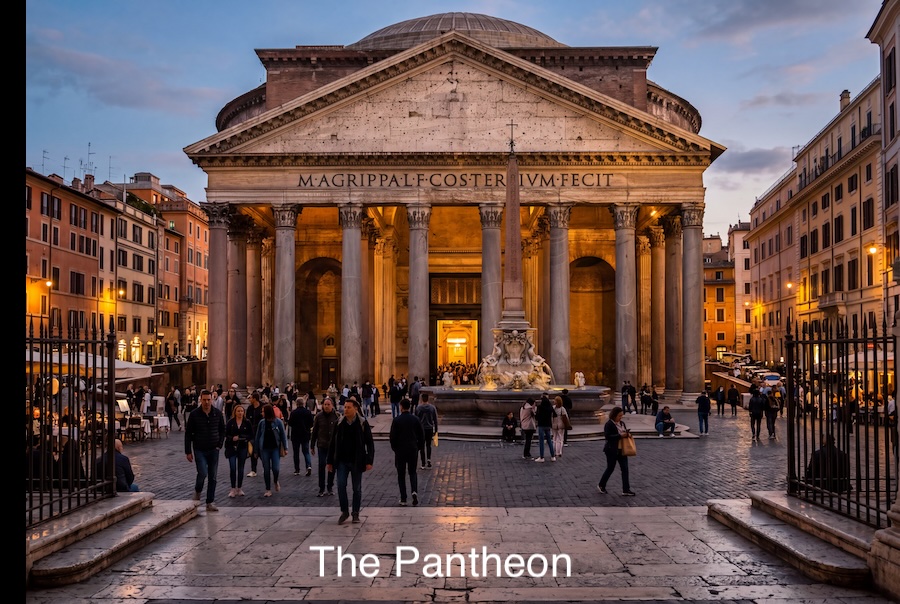
Roman concrete held up the Pantheon for nearly two thousand years; modern concrete crumbles in 50. The Romans’ formula, which used volcanic ash and seawater, has only recently been partly recovered by researchers at MIT.
Byzantine Greek fire, a naval weapon that burned on water, was such a closely guarded military secret that the formula was lost when the empire fell. Today we can only speculate what was in it.
A modern example from the 1990s is the case of Dutch inventor Romke Jan Bernhard Sloot. He claimed to have invented a data compression method that could shrink a full-length movie into an 8 kilobyte file, without loss of quality. An investor was ready to buy when Sloot died suddenly in 1999, taking the secret with him. Many now call the method impossible.

Rick Good spent ten years in the newspaper business, including with The News & Observer (Raleigh, NC) and The Greenville News (Greenville, SC). He co-wrote, with Melinda Coleman, Rutledge to Riley: Governors of South Carolina, 1776–Present (Published by The Greenville News), and is the author of Mind Games Trivia #1 (Amazon). He has recently spent 15 years creating original trivia content through Sounds Good Mobile Entertainment and continues that with his new company, SGME Software. He edits The Smart Reader’s money, real estate, and business coverage.