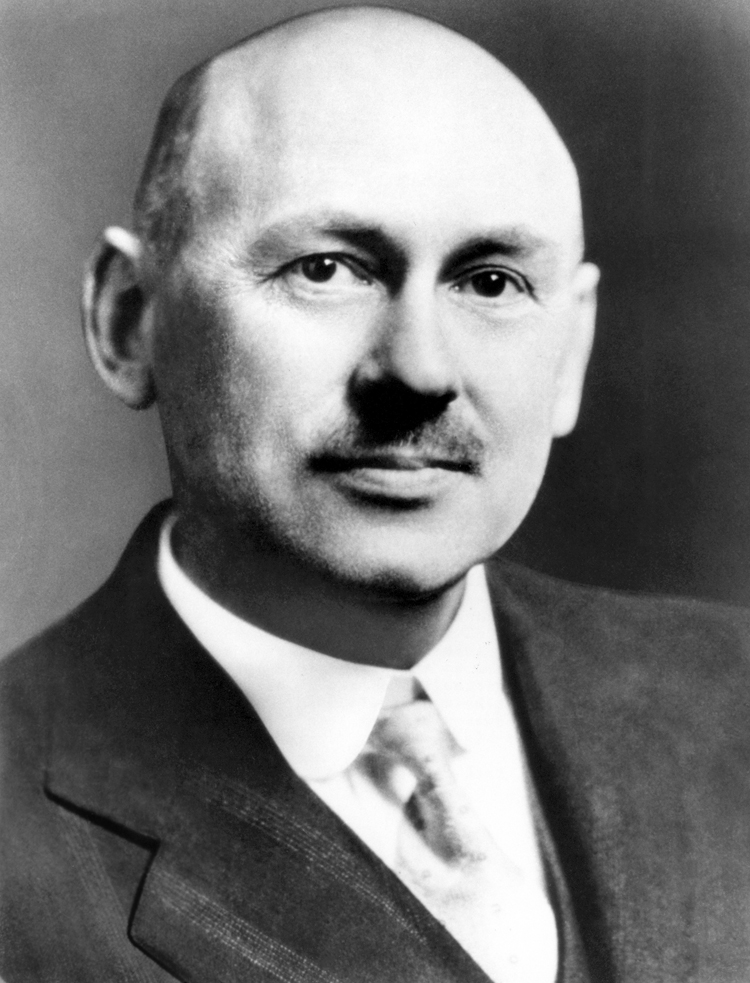
One hundred years ago, in March 1926, a scientist named Robert Goddard ushered in a space age by launching a small liquid-fueled rocket on his aunt's farm.
It was something of a secret.
Goddard had made bold in earlier years to speculate about the possibility of rockets reaching the moon and he soon learned his lesson. Not about the rockets, those he thought were inevitable, but he stopped talking in public.
In a stunning example of early misinformation, The New York Times in 1920 had mocked Goddard's rocket theories with a lot of hubris, and a little, very little, science., That Professor Goddard, with his "chair" in Clark College and the countenancing of the Smithsonian Institution, does not know the relation of action to reaction, and of the need to have something better than a vacuum against which to react — to say that would be absurd. Of course he only seems to lack the knowledge ladled out daily in high schools,, sniffed the Times.
The unsigned opinion piece misunderstood Newton's third law of motion'that rockets propel themselves by expelling mass, not by "pushing" against air. This ridicule contributed to Goddard's preference for secrecy.
Famously, on July 17, 1969 (50 years later on the day after Apollo 11 launched), The New York Times published a short correction acknowledging the error in light of the moon landing. It read in part: "Further investigation and experimentation have confirmed the findings of Isaac Newton in the 17th Century and it is now definitely established that a rocket can function in a vacuum as well as in an atmosphere. The Times regrets the error."

Rick Good spent ten years in the newspaper business, including with The News & Observer (Raleigh, NC) and The Greenville News (Greenville, SC). He co-wrote, with Melinda Coleman, Rutledge to Riley: Governors of South Carolina, 1776–Present (Published by The Greenville News), and is the author of Mind Games Trivia #1 (Amazon). He has recently spent 15 years creating original trivia content through Sounds Good Mobile Entertainment and continues that with his new company, SGME Software. He edits The Smart Reader’s money, real estate, and business coverage.